 English
 中文简体
90 Degree Elbow Extended-Socket Butt Weld Pipe Fitting
1. The water hammer action is reduced, with greater flow, more pressure, and fas...
View MoreContent
A street elbow is a pipe fitting that changes flow direction and has one male end and one female end. That mixed-end design is the reason it exists: the male end threads, sockets, or welds directly into another fitting, valve, or tank outlet, so the turn begins closer to the connection. You will also see the names street ell and service ell. In a crowded pump skid or a wall penetration, the saved length can replace a nipple and a standard elbow. The trade-off is less room to correct alignment after assembly, so end type, angle, pressure class, and material must be right before installation.
A standard elbow usually has two female ends—two sockets or two threaded hubs. A street elbow replaces one female end with a male end: a spigot, a male thread, or a butt-weld end. The angle may be 90° or 45°, but the angle alone does not make it a street elbow. The mixed ends do. That is why a “90-degree street elbow” is a subset of 90° elbows, not a separate angle category.
| Feature | Street elbow | Standard elbow |
|---|---|---|
| Ends | One male, one female | Usually two female |
| Installed length | Shorter center-to-face | Longer; may need a nipple |
| Typical location | At a valve, tank, header, or wall | General direction change |
| Adapter needs | Often eliminates one adapter | Often needs a separate nipple |
| Alignment tolerance | Less forgiving after assembly | Easier to adjust |
A 90° street elbow makes a right-angle turn at a connection. It is common at a valve outlet, a tank nozzle, or a header where a full standard elbow would push the pipe too far into the workspace. Because the male end enters the adjacent component, the fitting’s center-to-face dimension is shorter on that side. This helps in tight cabinets and retrofit work, but it also means the adjacent fitting carries the elbow’s load. Support the pipe independently; do not rely on the elbow to hold the run.
A 45° street elbow changes direction more gently. It is used when the layout needs an offset rather than a hard right angle, and when a gentler turn helps reduce turbulence or pressure loss. A 45° street elbow can also ease a transition into a sloped line or a manifold. It is not a universal substitute for a 90° elbow: check the available space and the direction of the male end before ordering.
Threaded street elbows are common in PVC, CPVC, and metal systems. The male thread must match the female port exactly—NPT and BSP are not interchangeable. Socket-fusion street elbows are common in PPH, PPN, and PVDF systems. The spigot or socket end must match the pipe outside diameter and the supplier’s fusion procedure. Butt-weld versions use a spigot end for welding. In all three cases, the pressure class of the fitting must match or exceed the pipe class, and the assembled joint must be tested as a system.
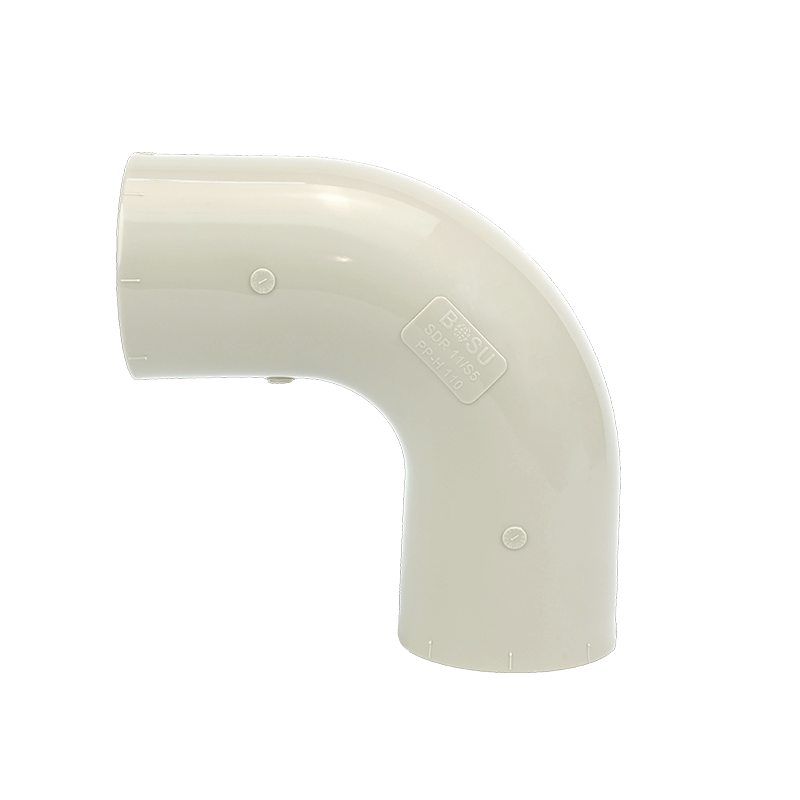 β-PPH 90 Degree Extended-Socket Butt Weld Elbow, 1.0 MPaA 90-degree β-PPH butt-weld elbow for changing pipe direction, with extended socket and 1.0 MPa series sizes from DN15 to DN300.View Product →
Street elbows are most useful where the pipe must turn immediately after a component. Examples include a valve outlet on a skid, a tank nozzle inside a containment area, a manifold header, a wall penetration, and a drain line with limited clearance. In these locations, a standard elbow plus a nipple may not fit, or may leave a joint that is difficult to support. A street elbow can shorten the assembly and reduce the number of joints.
They are not a cure for poor layout. If the male end is under bending stress, if the thread engagement is shallow, or if the adjacent valve cannot take the load, the saved space becomes a leak path. Use pipe supports and clamps to carry the weight. Leave enough room for threading, fusion equipment, or a wrench. For a 45° offset, a PPH hot-melt socket elbow can be a practical match when the line, pressure class, and fusion method are aligned.
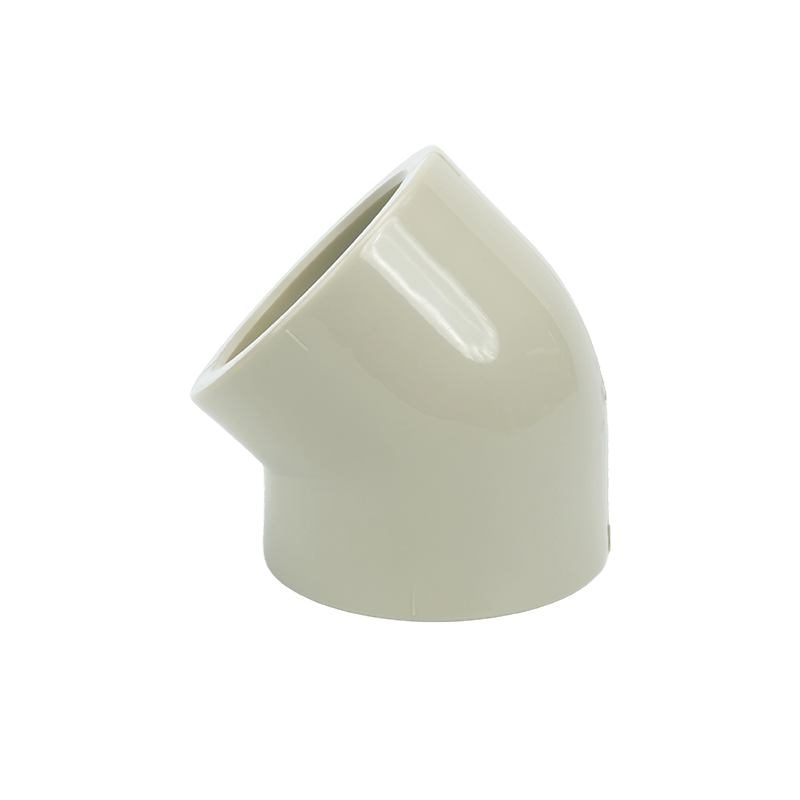 β-PPH 45 Degree Hot Melt Socket Elbow, 1.0 MPaA β-PPH 45-degree socket-fusion elbow rated 1.0 MPa, available from DN15 to DN100 for plastic piping systems needing directional changes.View Product →
Material selection follows the media, temperature, and joining method. PPH is widely used in chemical and water lines where chemical resistance and fusion joints are needed. PPN is used in higher-pressure or higher-temperature duties in the same family. PVDF is chosen for aggressive media and higher purity requirements. PVC and metal street elbows serve other ranges. The fitting must be compatible with the pipe, valves, gaskets, and sealants in the same line.
Pressure class is not a single number to copy from a catalog. A 1.0 MPa, 1.6 MPa, or 6 MPa rating applies under stated conditions; temperature and chemical exposure can reduce the allowable pressure. Match the elbow to the pipe class, verify the derating, and confirm the end type. When specifying PPH fittings, ask for the dimensional drawing, the fusion standard, and the batch traceability you need.
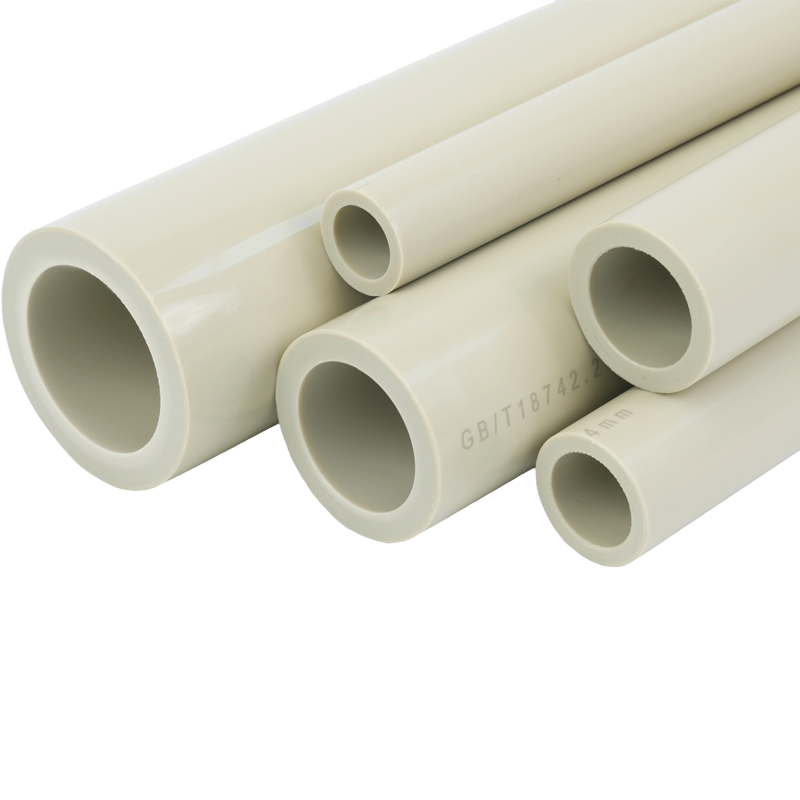 β-PPH Pipes, 1.6 MPa, DN15 to DN300β-PPH plastic pipe in the 1.6 MPa class, offered in nominal sizes from DN15 to DN300 with matching outside-diameter options.View Product →
Use this checklist before closing the joint:
Most field problems with street elbows come from specification shortcuts, not from the concept. Watch for these:
A clear line item should read like this: 90° street elbow, PPH, 1.6 MPa, socket fusion x spigot, 63 mm, EPDM-compatible service. If the supplier cannot confirm the drawing and material certificate, keep looking.
No. A 90° elbow is defined by angle. A street elbow is defined by having one male and one female end. A street elbow can be 90° or 45°.
Avoid it where the adjacent fitting cannot accept the load, where thread engagement would be shallow, or where you need extra alignment tolerance. It is a compact fitting, not a substitute for proper support.
Yes, if the valve port matches the male end and the valve is rated for the load. Check the valve manufacturer’s nozzle or connection limits before making the elbow the support point.
Provide material, angle, size, pressure class, male end type, female end type, joining method, media, and temperature. A dimensional drawing helps confirm that the compact shape fits the available space. If you are unsure, contact our team with the line details.
1. The water hammer action is reduced, with greater flow, more pressure, and fas...
View More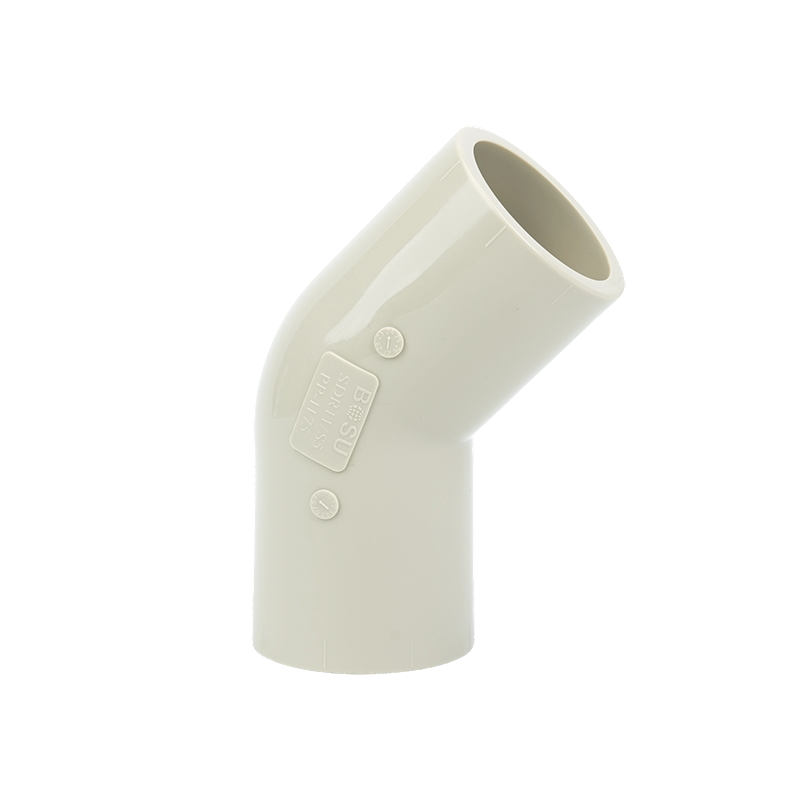
1. The stress is perfectly dispersed and the flow is smoother. 2. Due to the spe...
View More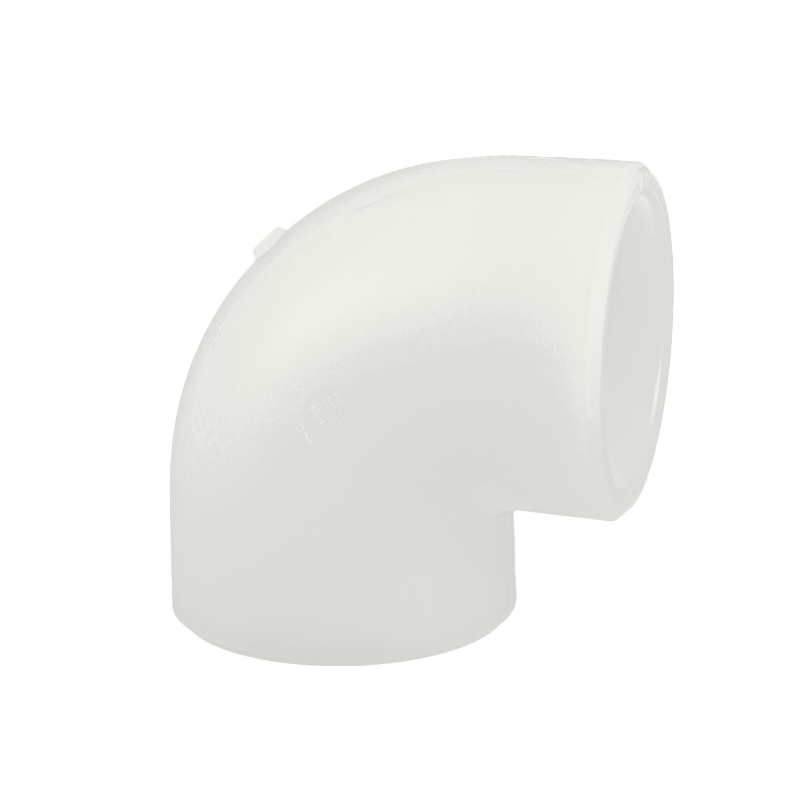
Product Specifications: DN15 (D20), DN20 (D25), DN25 (D32), DN32 (D40), DN40 (D5...
View More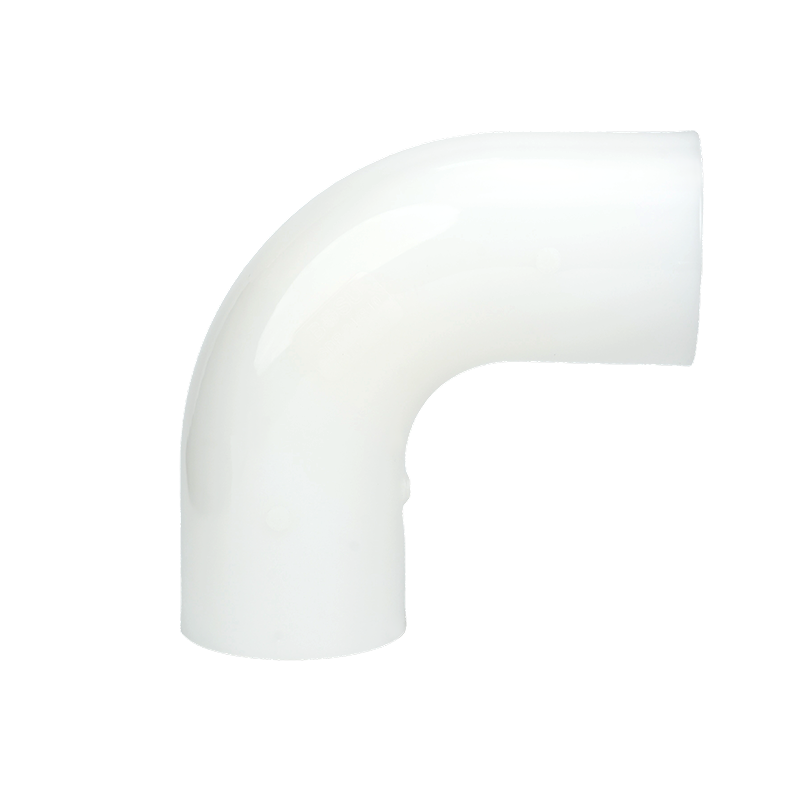
Product Specifications: DN15 (D20), DN20 (D25), DN25 (D32), DN32 (D40), DN40 (D5...
View More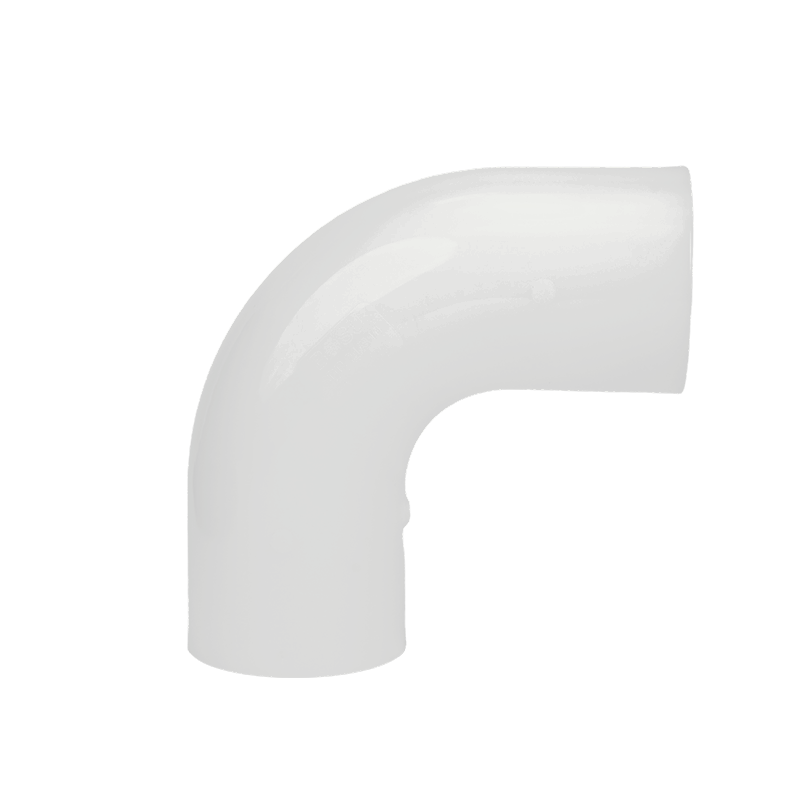
Product Specifications: DN15 (D20), DN20 (D25), DN25 (D32), DN32 (D40), DN40 (D5...
View More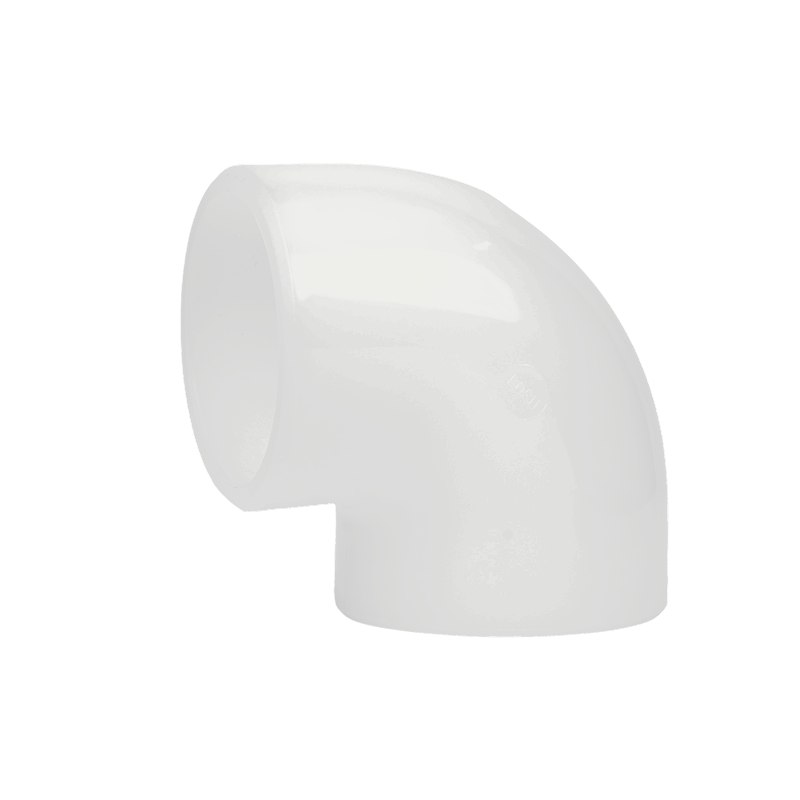
Product Specifications: DN15 (D20), DN20 (D25), DN25 (D32), DN32 (D40), DN40 (D5...
View More
Products
Company Information
Address: No. 55 Haichuan Road, High-Tech Zone, Dongtai City, Jiangsu Province, China
Mobile: +86 137 7009 5258
Tel: +86-515-85479999
Email: [email protected]
We'd love to hear from you!
