 English
 中文简体
Union Extended-Socket Butt Weld Pipe Fitting (EPDM/FPM)
This union is used to connect pipes into a pipeline system. Product Specificatio...
View MoreContent
A shutdown crew at a chemical plant had one job left before restart: replace a leaking gasket on a valve twelve metres inside a fully welded PPH line. Cutting the pipe meant a new spool, a new weld, a cooling wait and a second pressure test, four extra hours on a schedule with none to spare. One plastic pipe union at the valve inlet would have turned that job into a ten-minute task with a single strap wrench.
That is the practical case for a union, and it is why the specification matters more than the unit price. Choosing a plastic pipe union comes down to five decisions: a body material that matches the pipe, a pressure class that matches the system, a seal elastomer that survives the medium, an end connection that matches how the joint will be made, and a union style that fits the space. Get one wrong and you either leak at startup or lose the serviceability you paid for.
A union is a three-part fitting: two end bodies permanently joined to the pipe by heat fusion, butt welding or threading, and a central nut that pulls the two faces together against a seal. That seal, usually an O-ring, sometimes a flat gasket or a PTFE-faced ring, sits in a groove on one mating face. Loosen the nut and the joint opens; tighten it and the seal re-forms. Nothing is cut.
A coupling is a one-piece fitting. Once pipe is fused or welded into it, the joint is permanent. That is fine on a straight run nobody will open, and it is smaller and cheaper. It is the wrong choice anywhere the line needs service.
The rule we give customers: put a union wherever a joint will be opened more than once in the life of the plant. In practice this means:
Union part numbers look alike but describe very different fittings. A 1.0 MPa socket-fusion PPH union with an EPDM seal and a 1.6 MPa butt-weld PVDF union with an FPM seal are not interchangeable, even when the outside diameter matches.
| Decision | What it controls | Typical options |
|---|---|---|
| Body material | Chemical compatibility, temperature ceiling, purity, strength | Beta-PPH/PPH for general water and chemical duty; PPN where more strength is needed; PVDF for aggressive media, high purity and higher temperatures |
| Pressure class | Maximum working pressure the joint holds at operating temperature | 1.0 MPa, 1.6 MPa, 6 MPa |
| Seal elastomer | Chemical resistance and temperature limit of the softest part | EPDM, FPM, EPDM with PTFE facing |
| End connection | How the union fixes to the pipe and what tooling is needed | Socket fusion; short or extended socket butt weld; threaded female or male |
| Union style | How the joint meets the next component | Double union, single female union, flanged body union |
The body of a plastic union rarely fails; the seal does. EPDM is the default for water, wastewater and many dilute chemicals, and it handles weathering well across a wide temperature band. FPM suits oils, hydrocarbons and more aggressive media and tolerates higher temperatures. Where no single elastomer works, an EPDM ring with a PTFE facing gives the chemical resistance of PTFE with the elasticity of rubber.
Two habits prevent most seal-related downtime. Confirm compatibility against the real medium, concentration and operating temperature, not against a general chemical name. And keep spare seals for every union size on site, because a union that cannot be re-sealed is just an expensive coupling. When a joint has already leaked, the failure mode is usually visible on the ring: compression set, a nick from a sharp pipe end, swelling, or a ring pushed out of its groove. Those symptoms repeat across a plant, so it pays to read them rather than simply replacing parts. See these notes on common O-ring failures and how to identify them quickly.
The end connection decides how the union is installed and how much of the pipe's original strength the joint keeps.
Heated sockets melt the pipe end and the union end together, giving a homogeneous joint with no added material. This is the standard choice for PPH and PPN water and chemical lines at moderate diameters, and the fastest option with the right fusion tool.
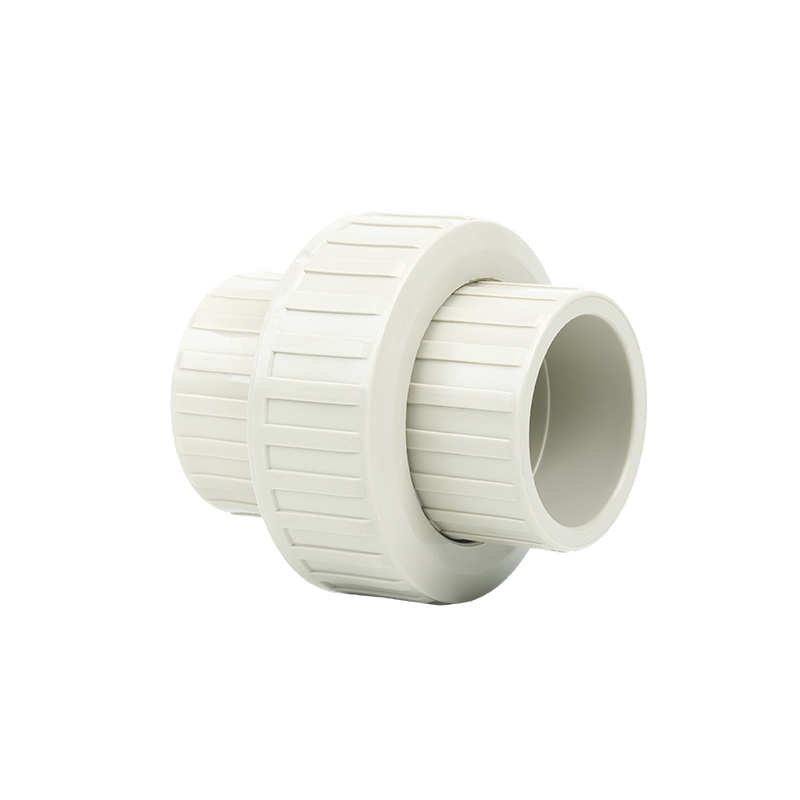 β-PPH Socket Fusion Union Pipe Fitting 1.0MPa EPDM/FPM SealThis socket fusion union suits moderate-diameter PPH and PPN water or chemical lines, with EPDM/FPM sealing and ratings up to 1.0 MPa.View Product →
Where the pipe itself is butt welded, usually at larger diameters and higher pressure classes, the union ends should be butt weld too. Extended socket ends give the welding machine more material to hold and produce a more forgiving weld.
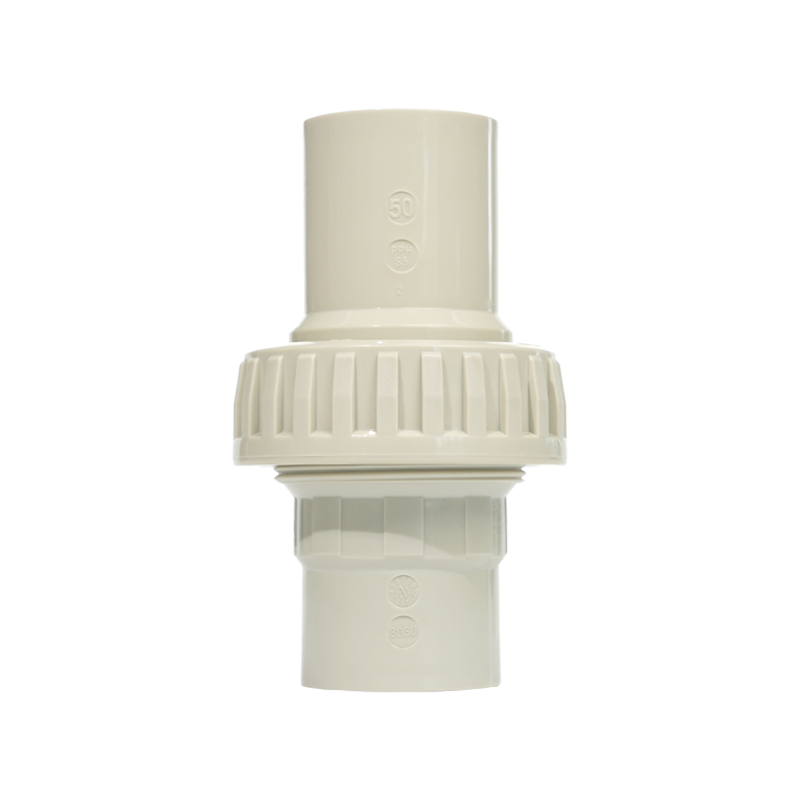 β-PPH Extended-Socket Butt Weld Union Fitting 1.0MPa EPDM/FPMFor butt-welded larger-diameter or higher-pressure PPH lines, this extended-socket union offers extra weld material and a more forgiving joint, rated 1.0 MPa.View Product →
A single female union threads directly onto a male port on a pump, valve or instrument, which helps when equipment arrives with a threaded connection. Threaded ends have practical limits on diameter and pressure, and they need tape or paste on the thread, never on the union's sealing face.
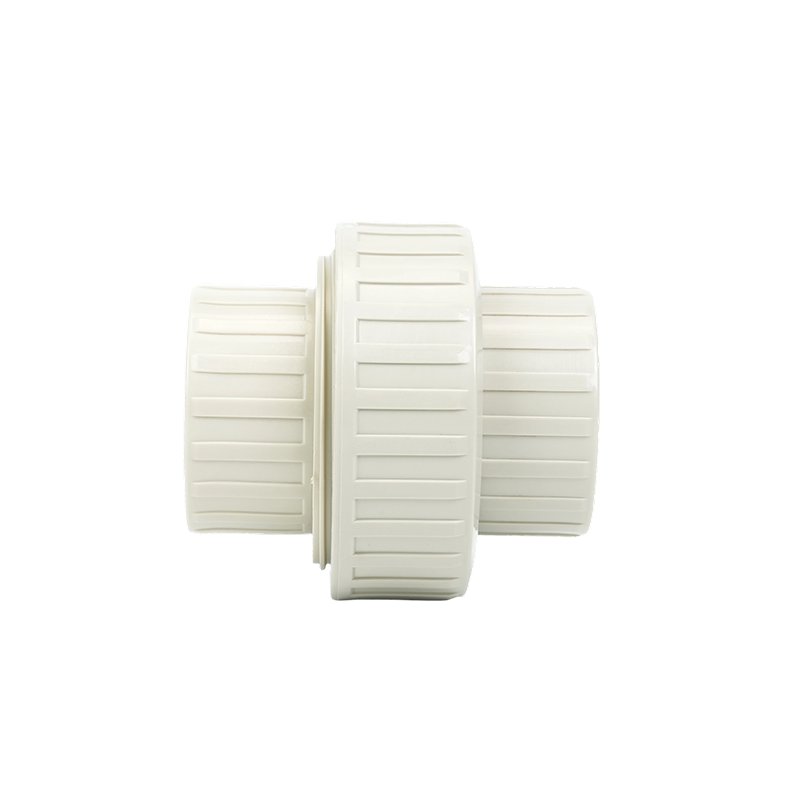 β-PPH Single Female Union with EPDM/FPM SealThreads onto male pump, valve or instrument ports; its EPDM/FPM seal gives moderate acid/alkali resistance for 1.0 MPa PPH socket fusion piping.View Product →
Union bodies come from the same materials as the rest of the plastic pipe fitting series, so a valve, fitting and pipe on one line can share a single grade and a single fusion procedure.
Pressure test before insulation, not after. A union that holds 1.5 times working pressure for thirty minutes is far less likely to surprise anyone at startup.
Two warning signs matter. If the body is quoted as generic PPH with no grade, and the seal is unnamed, you cannot audit what arrives, which is a bigger risk on a regulated or high-value line than any price difference between suppliers.
Yes, if the nut threads and both end faces are undamaged. Replace the seal as a matter of course, since elastomers take a compression set and rarely seal as well the second time.
A flange joint uses two flange faces, a gasket and a ring of bolts. A union uses one threaded nut and a captive seal. Unions are faster and need less space; flanges suit larger diameters and higher loads.
Usually the seal was displaced, pinched or replaced with the wrong elastomer, or the nut was tightened by feel. Check the ring first; the body is rarely the cause.
Specify the union the way you specify the pipe: material, pressure class, seal, then end connection. A union is a service part, so choose it for the technician who will open it in three years, not only for the installer who fits it today.
Union bodies sit in the same material family as the pipe, fittings and valves around them. Our beta-PPH, PPN and PVDF range covers the 1.0 MPa, 1.6 MPa and 6 MPa classes these systems use, and production is backed by 81 patents as of December 2024. If you are working through a line list and need to confirm a union body, seal or end configuration, send the drawing and the medium details and we will match it.
This union is used to connect pipes into a pipeline system. Product Specificatio...
View More
Product Specifications: DN15 (D20), DN20 (D25), DN25 (D32), DN32 (D40), DN40 (D5...
View More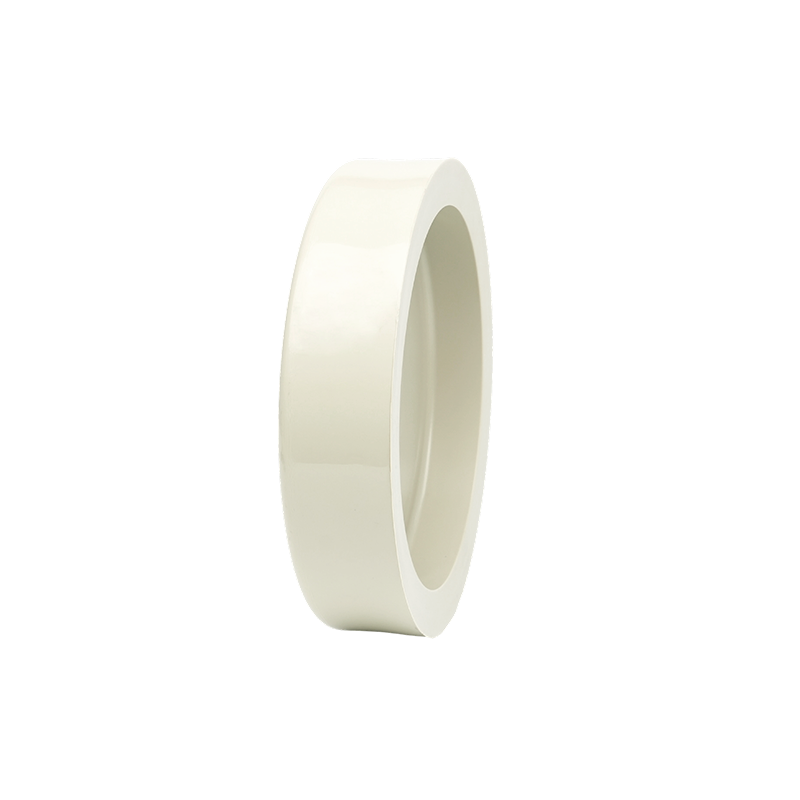
1. In addition to its basic closure function, the pipe cap can also be used for ...
View More
This fitting is designed to connect pipes into a pipeline system. It is suitable...
View More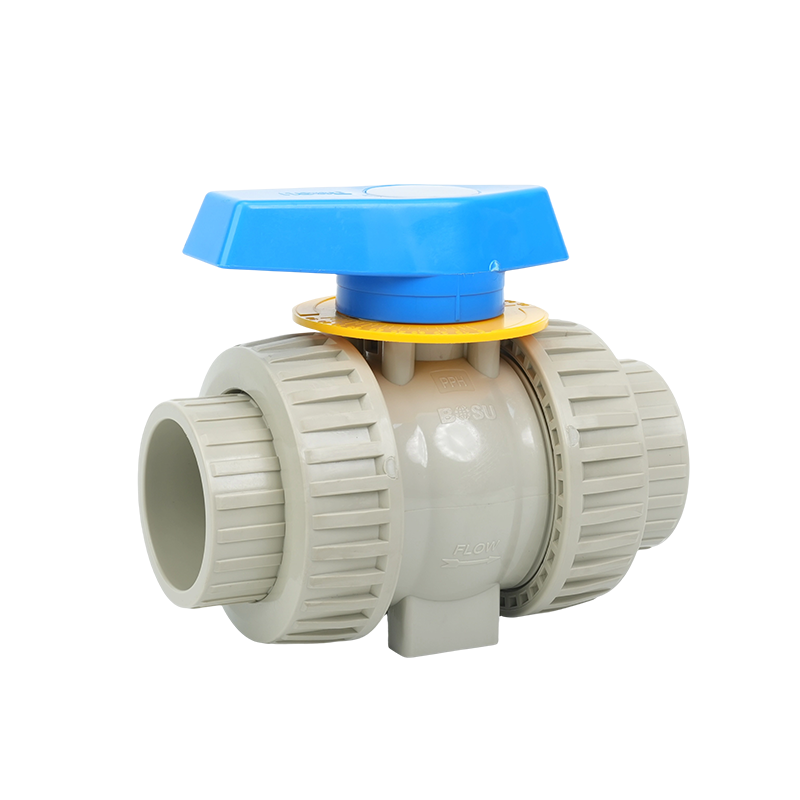
1. Product Features: Personalized handle indication function, install LOGO, medi...
View More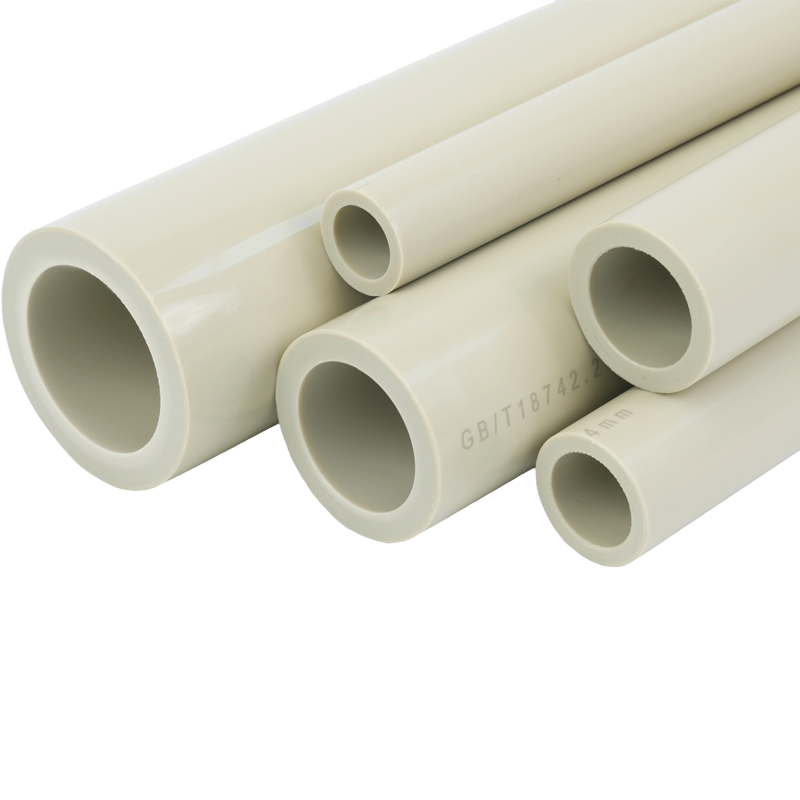
Product Specifications: DN15 (D20), DN20 (D25), DN25 (D32), DN32 (D40), DN40 (D5...
View More
Products
Company Information
Address: No. 55 Haichuan Road, High-Tech Zone, Dongtai City, Jiangsu Province, China
Mobile: +86 137 7009 5258
Tel: +86-515-85479999
Email: [email protected]
We'd love to hear from you!
