 English
 中文简体
中文简体
Pipe Cap Extended-Socket Butt Weld Pipe Fitting
1. In addition to its basic closure function, the pipe cap can also be used for ...
View MoreContent
Two fitters, one coil of 2 in PVDF pipe and a crate of DN 50 flange adapters. Everything arrives on schedule and nothing fits: the pipe measures 60.3 mm across the outside, while the adapter is machined for a 50 mm outside diameter. Neither label is wrong. The parts simply belong to two different sizing systems, and IPS is the one that catches most project teams out.
Here is the short answer first. IPS (Iron Pipe Size) is a North American nominal designation. From 1/2 in upward, the number in the name matches neither the outside diameter nor the bore. What it does fix is the outside diameter, inherited directly from steel pipe: 1 in IPS is always 33.4 mm OD, 2 in is always 60.3 mm, 4 in is always 114.3 mm, whatever the wall thickness. Metric thermoplastic pipe works the other way round — DN 50 means a 50 mm outside diameter. The two systems do not interchange at any size, and mixing them inside one bill of materials is the most common reason a first fusion joint fails or a flange weeps at commissioning.
What follows is what the IPS number actually controls, how it lines up against metric sizes, and how to keep pipe, fittings and valves dimensionally consistent on a single job.
IPS grew out of nineteenth-century iron and steel pipe practice. Manufacturers standardised the outside diameter so that threads, couplings and flanges from different mills would mate; when a heavier wall was needed for higher pressure, they thickened the wall inward and left the OD untouched. That single decision still governs the system, and it explains why Schedule 40 and Schedule 80 pipe of the same nominal size screw into the same fitting while carrying noticeably different bores.
Thermoplastic pipe applies the same logic under a different vocabulary. Wall thickness is set by the pressure class — expressed as SDR or as a nominal pressure such as 1.0 MPa or 1.6 MPa — while the outside diameter stays fixed. A PPH pipe with a 63 mm OD carries roughly a 5.7 mm wall in the 1.6 MPa class and roughly a 3.6 mm wall in 1.0 MPa. Same OD, same fittings, different bore, different flow.
| Nominal IPS size | Outside diameter (in) | Outside diameter (mm) |
|---|---|---|
| 1/2 in | 0.840 | 21.3 |
| 3/4 in | 1.050 | 26.7 |
| 1 in | 1.315 | 33.4 |
| 1-1/4 in | 1.660 | 42.2 |
| 1-1/2 in | 1.900 | 48.3 |
| 2 in | 2.375 | 60.3 |
| 3 in | 3.500 | 88.9 |
| 4 in | 4.500 | 114.3 |
Read the third column closely. A "1 inch" pipe is 33.4 mm across, more than a third larger than the name suggests, while a 1/2 in pipe is 21.3 mm rather than 12.7 mm. Anyone who converts the nominal figure straight into millimetres will be wrong in both directions, on the same order.
The tempting shortcut is to treat 2 in as 50 mm and move on. The nearest metric thermoplastic sizes are close, but the error runs in both directions, which is precisely what makes the assumption dangerous: below 1-1/4 in the IPS pipe is slightly larger than the metric equivalent, and from 1-1/2 in upward it is slightly smaller. A crew that "corrects" a drawing once and then reuses the rule elsewhere will eventually order the wrong parts.
| Nominal IPS size | IPS OD (mm) | Nearest metric OD (mm) | Difference (mm) | Directly interchangeable |
|---|---|---|---|---|
| 1/2 in | 21.3 | 20 | +1.3 | No |
| 3/4 in | 26.7 | 25 | +1.7 | No |
| 1 in | 33.4 | 32 | +1.4 | No |
| 1-1/4 in | 42.2 | 40 | +2.2 | No |
| 1-1/2 in | 48.3 | 50 | -1.7 | No |
| 2 in | 60.3 | 63 | -2.7 | No |
On site, a gap of 0.2 mm to 2.7 mm means no fusion joint and no flanged joint can be assembled from mismatched parts. Socket fusion depends on the pipe OD entering the fitting bore within the manufacturer's tolerance, so a 60.3 mm pipe will not seat in a socket cut for 50 mm, and a 50 mm pipe will sit loose in a socket cut for 60.3 mm. Flange adapters are no more forgiving, because the bolt circle, hole count and facing dimensions also differ between ANSI Class 150 and PN 10/16 patterns even when the bore nominally matches.
Sizing decisions rarely stop at the outside diameter. Flow capacity depends on the bore, and the bore is set by the pressure class rather than by the nominal size on the drawing.
Take a 63 mm OD pipe. In the 1.6 MPa class the wall is about 5.7 mm, leaving a bore near 51.6 mm. In the 1.0 MPa class the wall drops to roughly 3.6 mm and the bore opens to about 55.8 mm. That is roughly an 8 percent difference in diameter and about 17 percent more flow area at the lower pressure class — enough to shift the velocity in a line and often enough to change the pump duty point.
Velocity is the number to watch. For thermoplastic piping, sustained velocities between roughly 1 and 2.5 m/s keep pressure loss and surge risk manageable; above that range, a fast valve closure can push a pressure spike past the short-term strength of the material. The relationship between diameter, flow rate, velocity and pressure is set out in more detail in our note on how pipe diameter, flow rate, velocity and pressure relate, which is worth reading before a line size is fixed.
Temperature adds a second correction. Thermoplastic pressure ratings are quoted at 20 °C, and the allowable working pressure falls as the service temperature rises, so a 1.6 MPa pipe at 60 °C is not a 1.6 MPa pipe. Diameter selection and pressure class selection should therefore be made together, not one after the other.
Once the sizing system is settled, the rest of the bill of materials should follow it. Fittings and valves are dimensioned against the pipe's outside diameter and wall, so a run built from metric PPH components should not be completed with IPS parts, however close the two names look on paper.
On the pipe side, we produce PPH, PPN and PVDF pipe in metric outside diameters from 20 mm upward, with the pressure class printed on the label so the bore can be confirmed before installation.
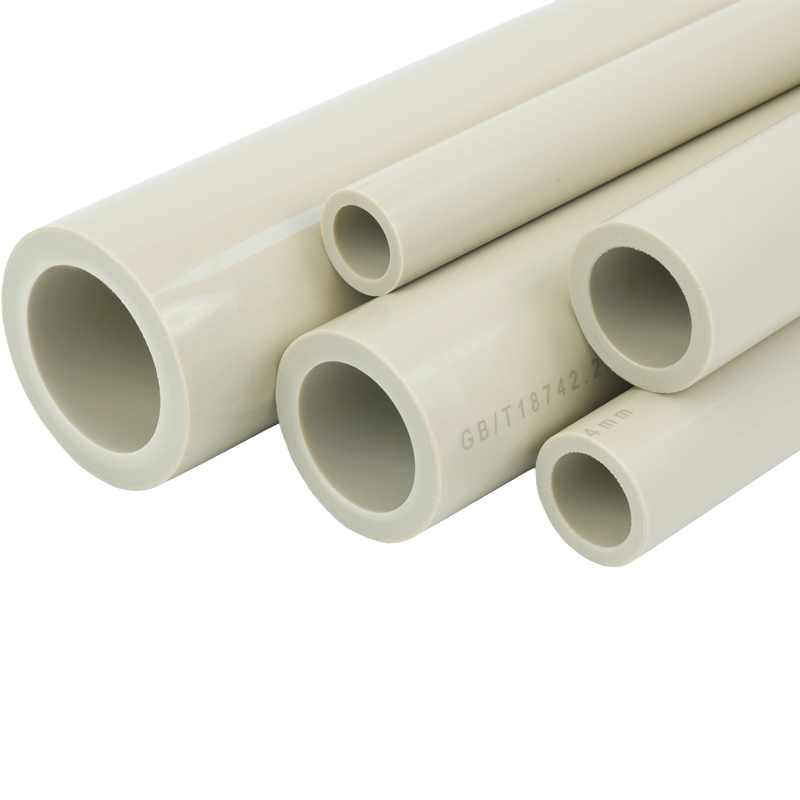 β-PPH Pipes 1.6 MPa for Metric Pipe RunsView β-PPH pipe options rated 1.6 MPa, with metric outside diameters from DN15/D20 upward for coordinated plastic piping assemblies.View Product →
On the fitting side, choose the joint type before the size, because the two are linked. Hot melt socket fusion is the fastest option in the smaller sizes; short butt weld and extended butt weld fittings suit larger diameters and higher pressure classes; flange adapters and backing rings are used where a run has to be broken for maintenance or tied into a flanged valve.
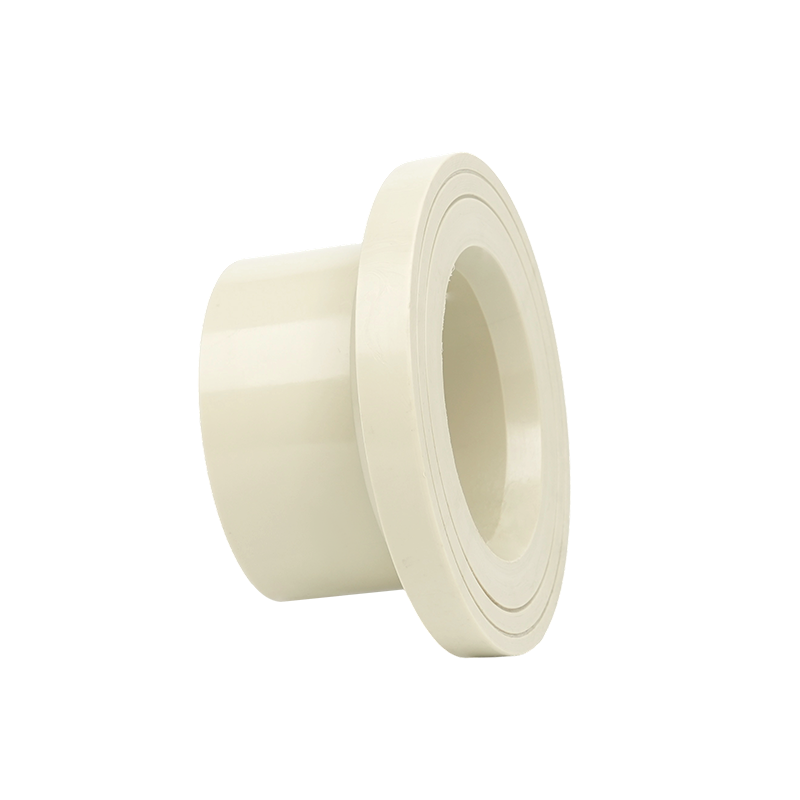 β-PPH Flange Adapter for Plastic Piping ConnectionsConnect pipe sections or tie into flanged valves with this β-PPH flange adapter, offered in sizes from DN15/D20 to DN300/D315.View Product →
Valves add one more decision. Double union ends allow a ball valve to be unscrewed and serviced without cutting the line, while flanged ends suit larger bore runs and higher torques. Either way, the end connection has to be dimensioned to the same outside diameter as the pipe it sits between — a valve described as "2 inch" will not bridge a 60.3 mm pipe and a 50 mm pipe.
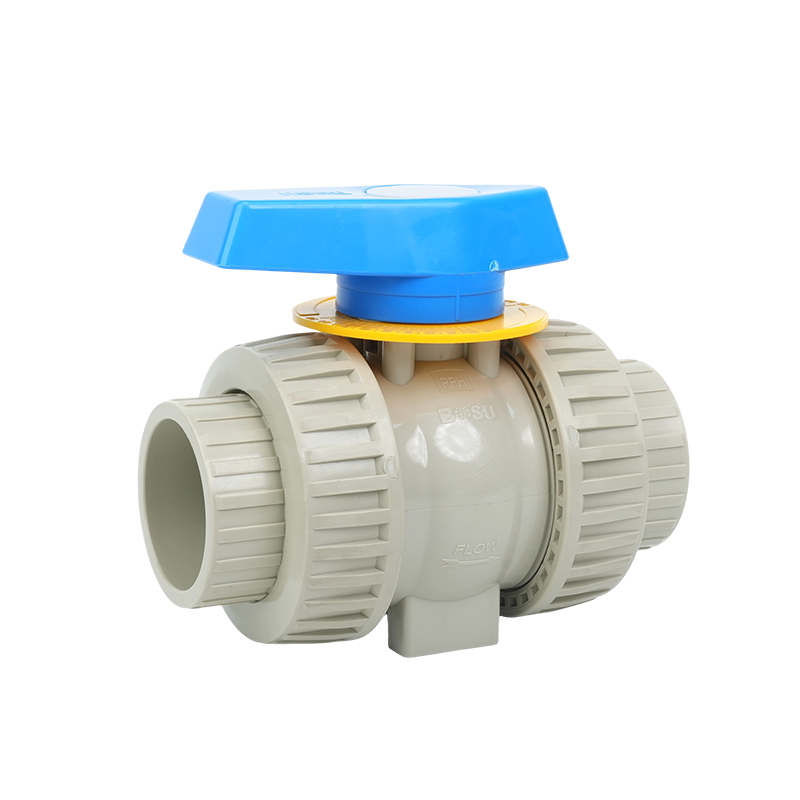 β-PPH Double Union Ball Valve with Flow Control DialReview this β-PPH double union ball valve with handle indication, nut locking, and angle dial for flow control in plastic piping systems.View Product →
Order pipe, fittings and valves from one dimensional system, one material family and one pressure class, and the assembly risk drops back to ordinary craftsmanship.
None of these checks takes long individually. Skipped together, they are the usual reason a shutdown extends by a day while a replacement part is sourced.
No. IPS describes an outside-diameter series for pipe, while NPT describes a thread form cut onto that pipe. The two are related in practice — a 1 in NPT thread is cut on a 33.4 mm OD pipe — but a pipe can be IPS sized without carrying any thread at all.
Almost never. In Schedule 40 steel the bore of a 1 in IPS pipe is around 26.6 mm, and in thermoplastic pipe the bore is set by the SDR or pressure class rather than by a fixed schedule. The outside diameter is the only dimension the nominal size reliably predicts.
Not by socket fusion or butt welding, because the outside diameters differ by more than any fusion tolerance allows. A transition requires a purpose-made adapter, or a flanged joint in which both sides were specified to the same flange standard from the outset.
Our pipe range covers β-PPH, PPN and PVDF in 1.0 MPa, 1.6 MPa and 6 MPa classes depending on material, supported by matching fittings in hot melt socket, short butt weld and extended butt weld series, plus ball, butterfly, check and foot valves with union or flanged ends.
If a specification has arrived with IPS figures on it and you need the metric equivalent, the safest route is to work from the outside diameter and the pressure class rather than from the nominal number. Send us the drawing, the medium, the working temperature and the required flow rate, and we will confirm which metric size and pressure class will actually fit the line — and which fittings and valves should be ordered alongside it.
You can reach our technical team through the contact page, and we will come back with a size list you can quote against directly.
1. In addition to its basic closure function, the pipe cap can also be used for ...
View More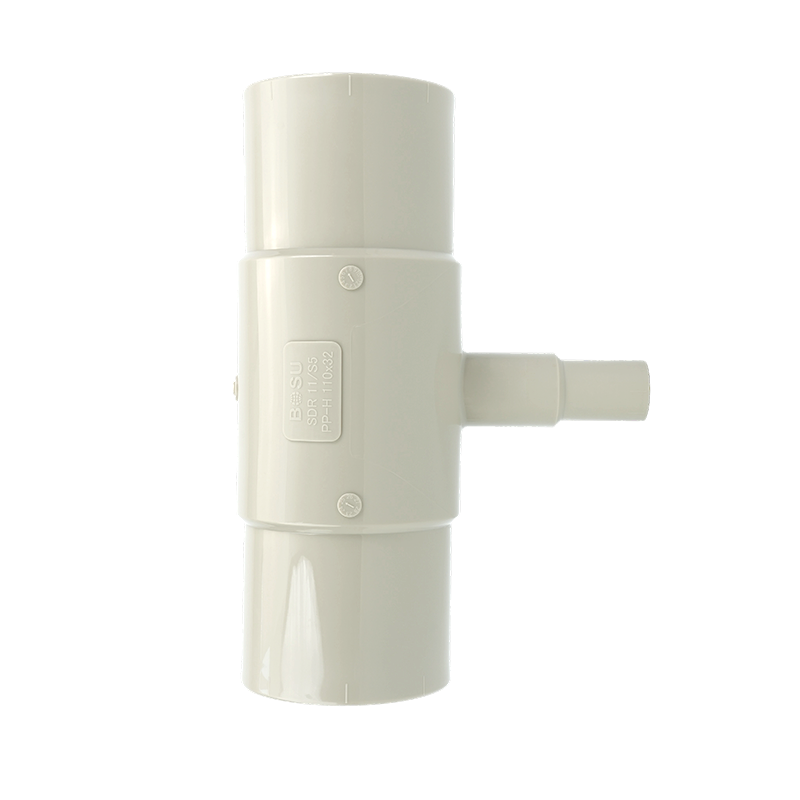
1. Designed for pipe extension, these fittings feature two identical ports and o...
View More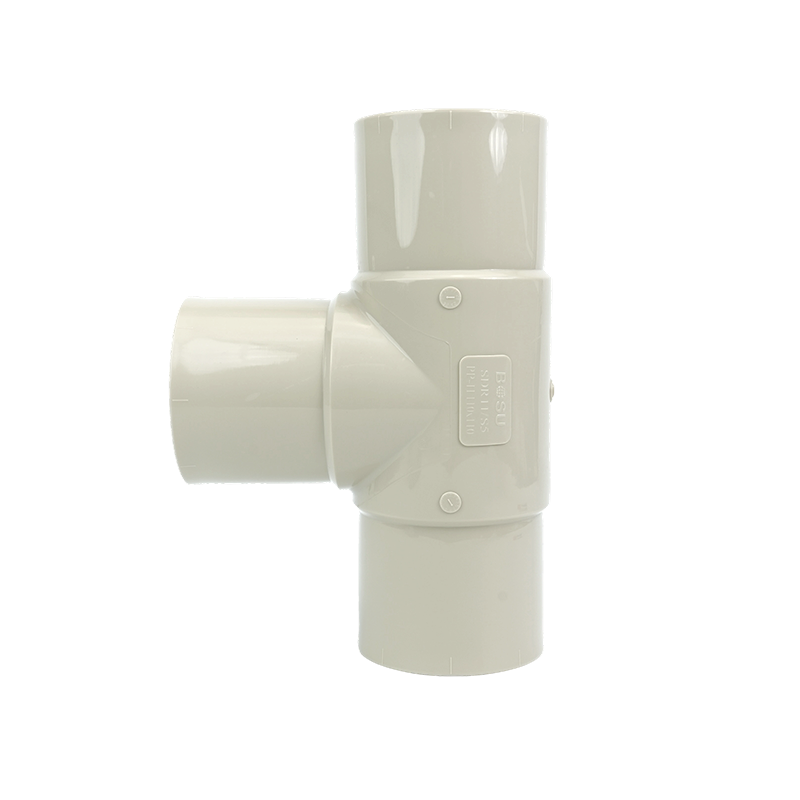
1. It features an elongated, streamlined profile with smooth internal and extern...
View More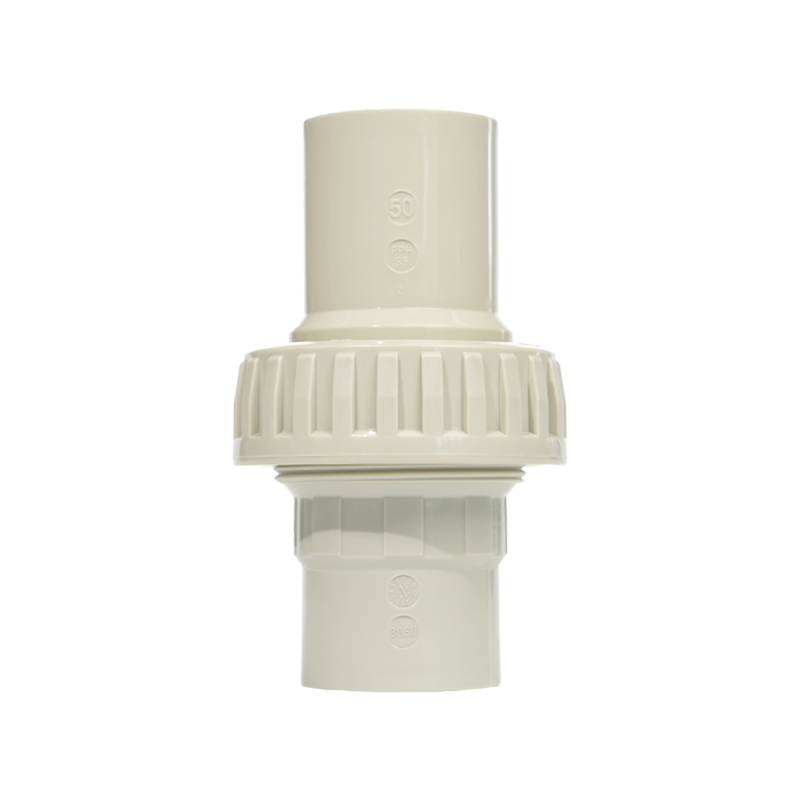
This union is used to connect pipes into a pipeline system. Product Specificatio...
View More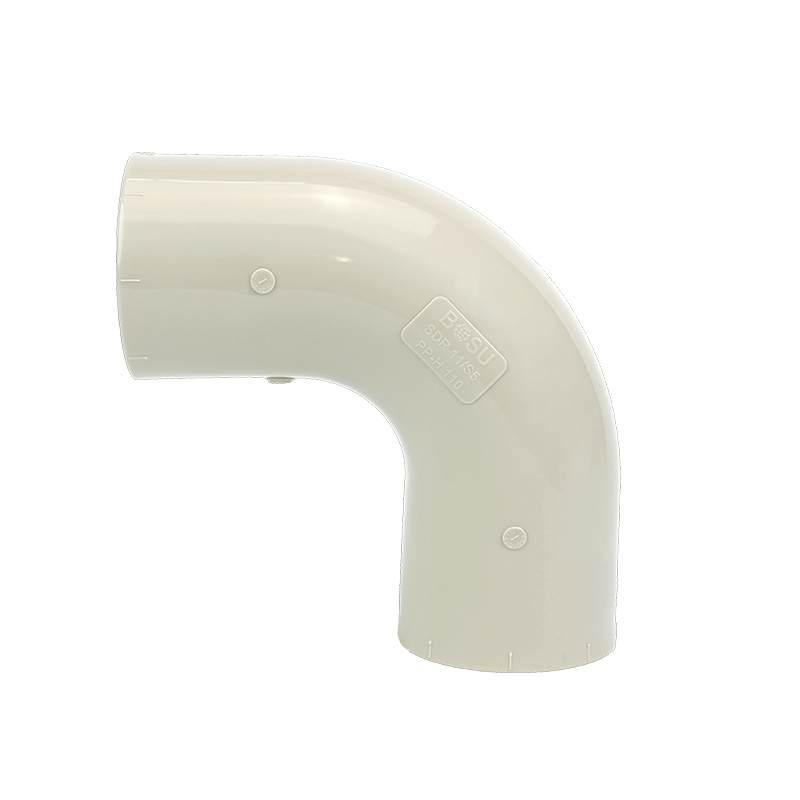
1. The water hammer action is reduced, with greater flow, more pressure, and fas...
View More
1. The stress is perfectly dispersed and the flow is smoother. 2. Due to the spe...
View More
Products
Company Information
Address: No. 55 Haichuan Road, High-Tech Zone, Dongtai City, Jiangsu Province, China
Mobile: +86 137 7009 5258
Tel: +86-515-85479999
Email: [email protected]
We'd love to hear from you!
