 English
 中文简体
中文简体
β-PPH External Thread Straight Short Butt-Weld Fitting
1. Fast connection, high pressure resistance, good sealing, safe and reliable wo...
View MoreContent
A one-inch hose tail that threads two turns into a pump inlet and then stops is how most hose fitting adapter problems announce themselves. The diameter matches, the label matches, the thread form does not, and no amount of thread tape will close the gap between a parallel G thread and a tapered NPT thread of the same nominal size.
The short answer first: choose a hose fitting adapter by three interfaces, not one. The hose end must match the hose bore and the clamp or ferrule it will carry. The equipment end must match the port thread or flange exactly. The seal must survive the medium, the temperature and the pressure. Material choice follows from those three decisions, never the other way round.
What follows is how those decisions play out on plastic piping in chemical, plating, water treatment, semiconductor and pharmaceutical plants, from thread tables to torque limits to the point where a 1.6 MPa label quietly stops meaning anything.
Buy an adapter by size alone and you will usually buy it twice. Break it into its three connections and the specification writes itself.
Most of the parts that solve this problem are catalog items rather than specials, and it helps to know what each fitting family actually does before ordering. Our overview of the main functions of plastic pipe fittings covers the roles of unions, tees, adapters and end caps in a plastic line.
Four thread systems cover almost every industrial hose fitting adapter port, and two of them look nearly identical until you count threads per inch.
| Designation | Also called | Form | How it seals |
|---|---|---|---|
| ISO 228-1, G | BSPP | Parallel, 55 degree flank | Flat face with gasket, O-ring or bonded washer |
| ISO 7-1, R / Rp | BSPT | Tapered, 55 degree flank | Thread engagement plus sealant |
| ASME B1.20.1, NPT | NPT | Tapered, 60 degree flank | Thread engagement plus sealant |
| DIN 13, metric | Metric parallel | Parallel, 60 degree flank | Face gasket, often on an O-ring seat |
Two numbers are worth remembering. A one-inch G thread carries 11 threads per inch at a 55 degree flank angle, while a one-inch NPT thread carries 11.5 threads per inch at 60 degrees. Across the length of a typical port, that difference is enough to bind the joint after two or three turns, which is exactly the "it went in halfway" symptom.
We mould male and female threaded straights in β-PPH, PPN and PVDF that place a parallel G thread on a socket-fusion body, so a plastic line can meet a hose tail, a bushing or a metal flange without an insert.
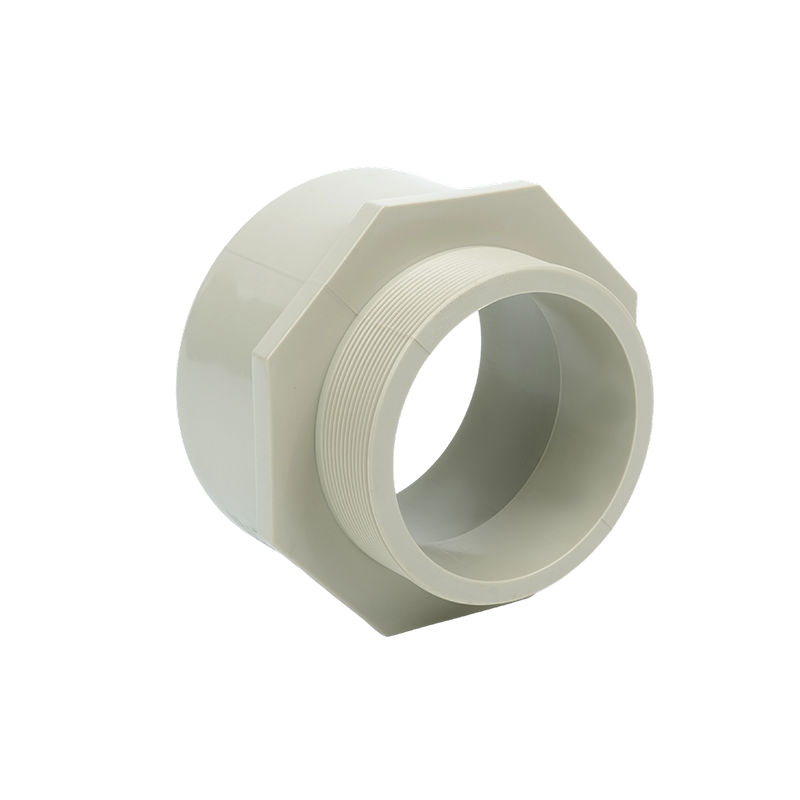 β-Pph External Tooth Direct Hot Melt Socket Pipe Fittings 1.0mpaβ-Pph External Hexagonal Wire Plug Hot Melt Socket Pipe Fittings 1.0mpaView Product →
Check the port form as well as the size. A tapered male thread in a parallel female port seals on the threads; a parallel male thread needs a flat shoulder, an O-ring or a bonded washer, and it will never seal on thread engagement alone.
Once the threads match, the plastic decides how long the joint survives. Our range covers three materials, each with its own pressure envelope and its own natural service.
| Material | Pressure classes | Where it usually fits | Typical seal pairing |
|---|---|---|---|
| β-PPH | 1.0 MPa, 1.6 MPa | Chemical dosing, plating lines, water treatment, general acid and alkali service | EPDM or FPM gaskets, EPDM O-rings in unions |
| PPN | 1.0 MPa, 6.0 MPa | Higher pressure transfer lines, filtration skids, utility water | EPDM or FPM gaskets depending on medium |
| PVDF | 1.0 MPa, 1.6 MPa, 6.0 MPa | High purity and aggressive media: semiconductor, pharmaceutical, fine chemical | PTFE-faced or FPM gaskets, low-extraction elastomers |
Two practical rules follow from that table. First, do not downgrade material to save a small amount on a line where the medium is the real risk; a PVDF adapter on a solvent line costs less than one shutdown. Second, keep one material family per line where possible, because mixed materials change the fusion parameters and the thermal expansion behaviour of the run.
The figure stamped on a fitting, 1.0 MPa or 1.6 MPa, is a nominal rating at reference conditions, normally around 20 degrees Celsius with water. It is not a promise for your line. Temperature and time erode it, and vibration and water hammer erode it faster.
Read that chart as an envelope, not a ranking. PVDF reaching 6.0 MPa does not make it the right answer for every 6.0 MPa line, because chemical resistance, purity and cost still apply. Conversely, a β-PPH adapter rated at 1.6 MPa is perfectly sound at 0.4 MPa working pressure in a plating line, which is where most of these parts actually live.
Threaded plastic ports fail by cracking, not by stripping. Torque figures exist for a reason, and a metal hose tail screwed hard into a plastic adapter is a common cause of a hairline crack that only shows up as a slow weep three weeks later.
The body can be perfect and the joint can still leak. Elastomer choice is driven by medium first and temperature second, and the difference between two gaskets that look identical is often the difference between a two-year run and a two-month one.
For flanged joints the gasket carries the load. A plain EPDM gasket handles water, most dilute acids and alkalis and general non-oil service. An EPDM gasket with a PTFE facing adds chemical breadth and releases more easily after a long run, which matters when maintenance has to break a joint that has sat for two years. FPM covers oils, fuels and many solvents that would swell EPDM.
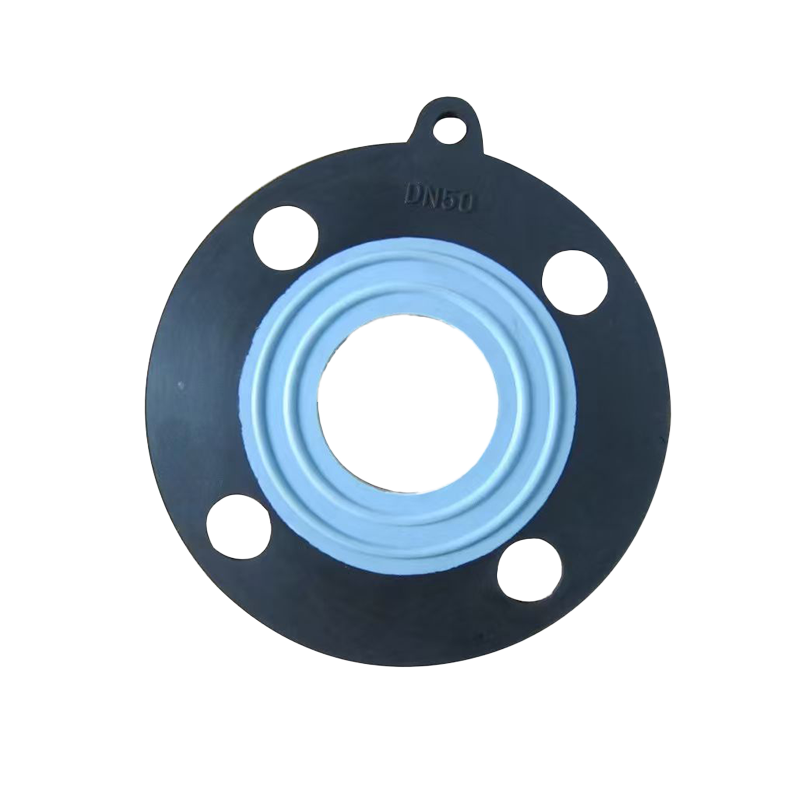 EPDM+PTFE Flange PadProduct Specifications: DN15 (D20), DN20 (D25), DN25 (D32), DN32 (D40), DN40 (D50), DN50 (D63), DN65 (D75), DN80 (D90), DN100 (D110), DN100 (D125), DN125 (D140), DN150...View Product →
Seal condition is also a purchasing issue, not only a technical one. Gaskets have shelf life, and a box that has sat in a hot warehouse for three years will not perform like a fresh one. Order gaskets with the adapters rather than from a separate budget line, and store them cool and flat.
Three body styles cover nearly every hose fitting adapter request, and each one moves the risk to a different place in the assembly.
Where a line ends in a thread and still has to be removable, a socket-fusion union with an EPDM or FPM seat is normally more robust than a bare threaded adapter, because the seal sits in a controlled groove instead of on the threads.
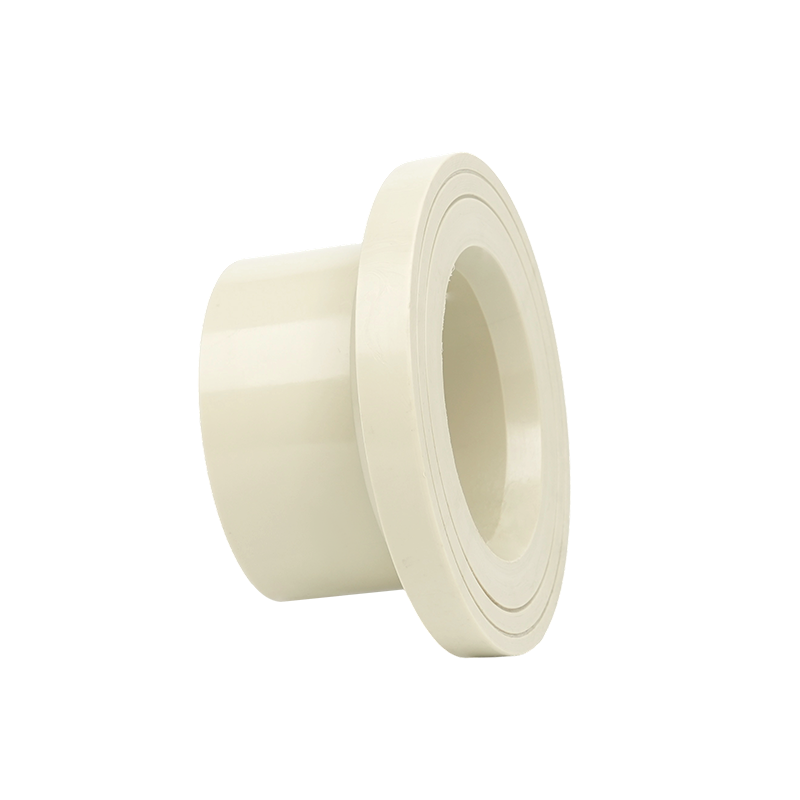 β--PPH Flange AdapterIts primary purpose is to interconnect sections of piping.View Product →
Our PPH flange adapter follows that logic: the socket end fuses to the pipe, the flange face takes a standard gasket and bolt set, and the mating flange or hose tail is bolted on the other side. For a 1.0 MPa line it gives you a bolted, gasketed, serviceable joint at the point where the plastic system meets metal equipment.
Most wrong adapters are ordered with incomplete information, not with bad judgement. Seven lines of detail prevent the return.
No. The pitch and flank angle differ, so the threads never seat across their full length. The joint may hold at low pressure for a while and then weep. Match the thread form instead of compensating with sealant.
Yes, within limits. Use a parallel thread with a face gasket rather than a tapered metal thread, respect the torque specification for the plastic port, and support the hose so its weight is not hanging on the threads.
Usually not. Nominal ratings are referenced to roughly 20 degrees Celsius, and thermoplastic strength falls as temperature rises. Derate for service temperature and leave margin for vibration and water hammer.
Yes, if they are joined mechanically through a union or flange with a compatible gasket. Direct heat fusion between different materials does not produce a dependable joint.
If you send us the port details, the hose bore, the medium and the continuous temperature, we can confirm the adapter, the gasket and the pressure class in one reply instead of three. Send your line list to our team and we will come back with a matched set, from the threaded or flanged adapter through to the gasket and the pipe end it fuses to.
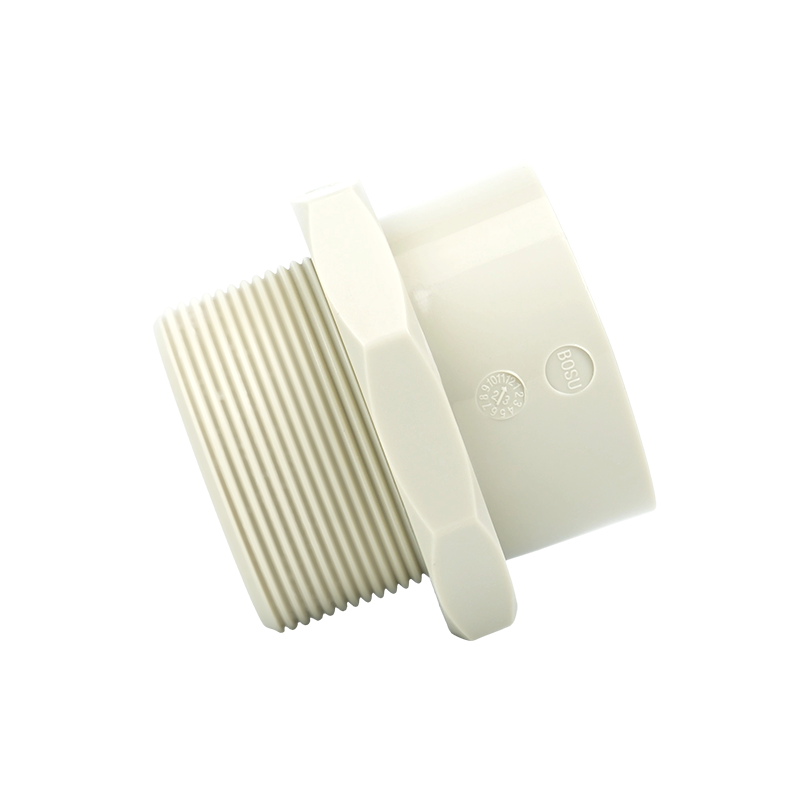
1. Fast connection, high pressure resistance, good sealing, safe and reliable wo...
View More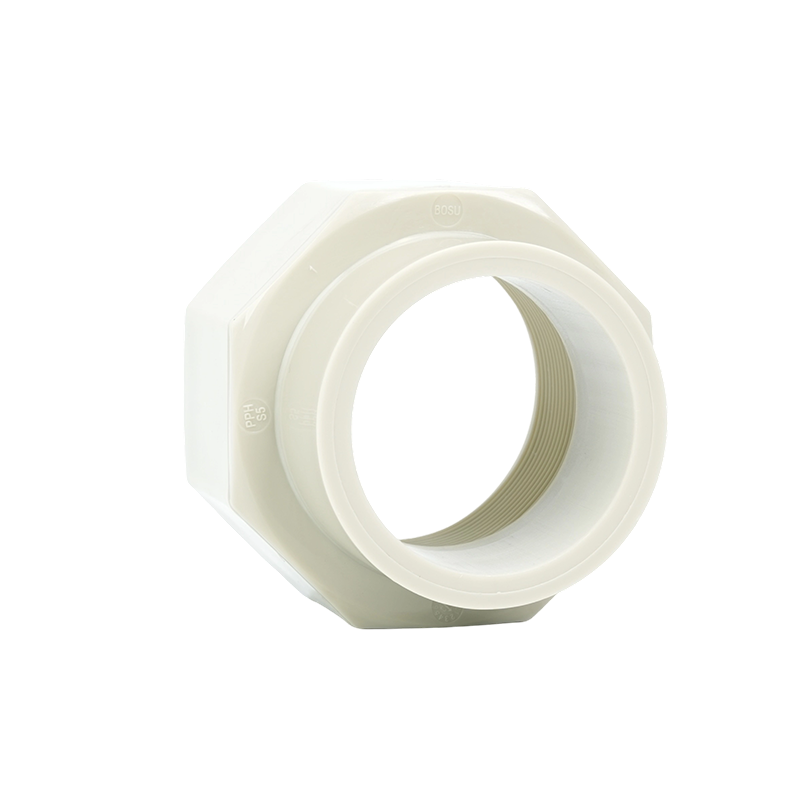
1. This product features quick, secure, and efficient installation. Its smooth i...
View More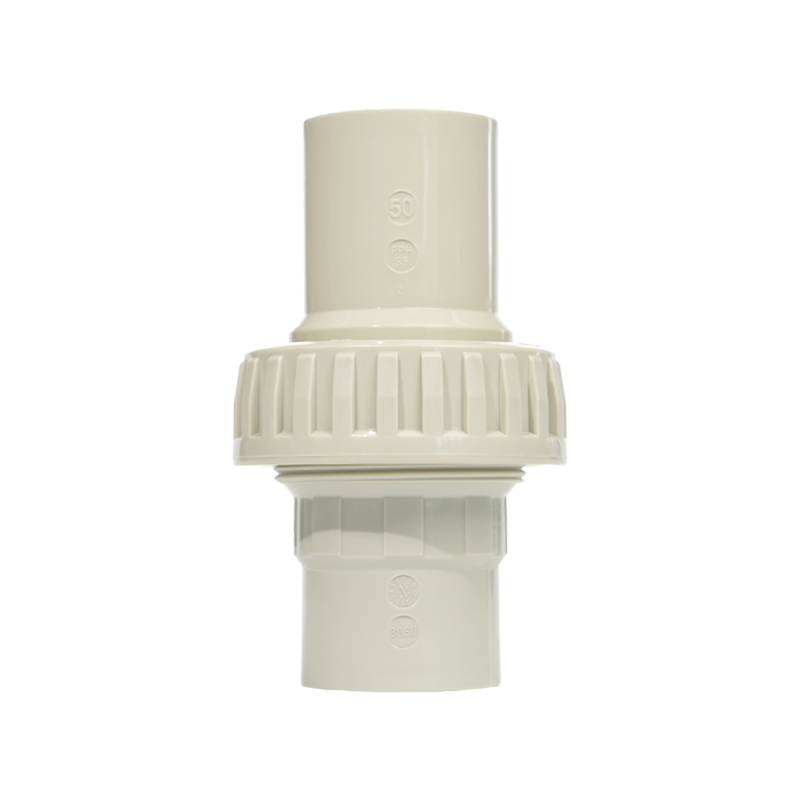
This union is used to connect pipes into a pipeline system. Product Specificatio...
View More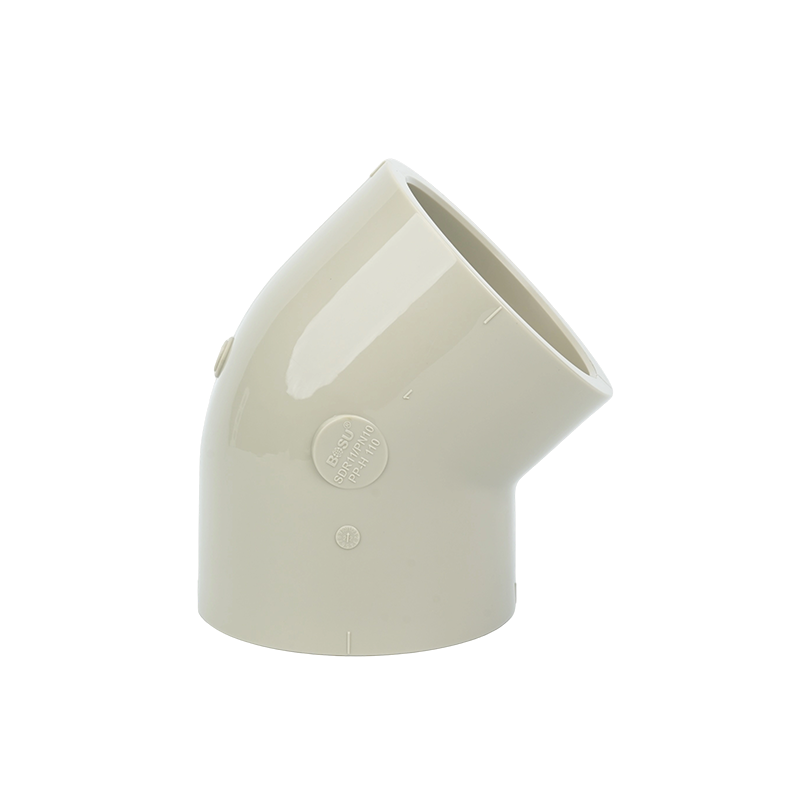
Product specifications are: DN15 (D20), DN20 (D25), DN25 (D32), DN32 (D40), DN40...
View More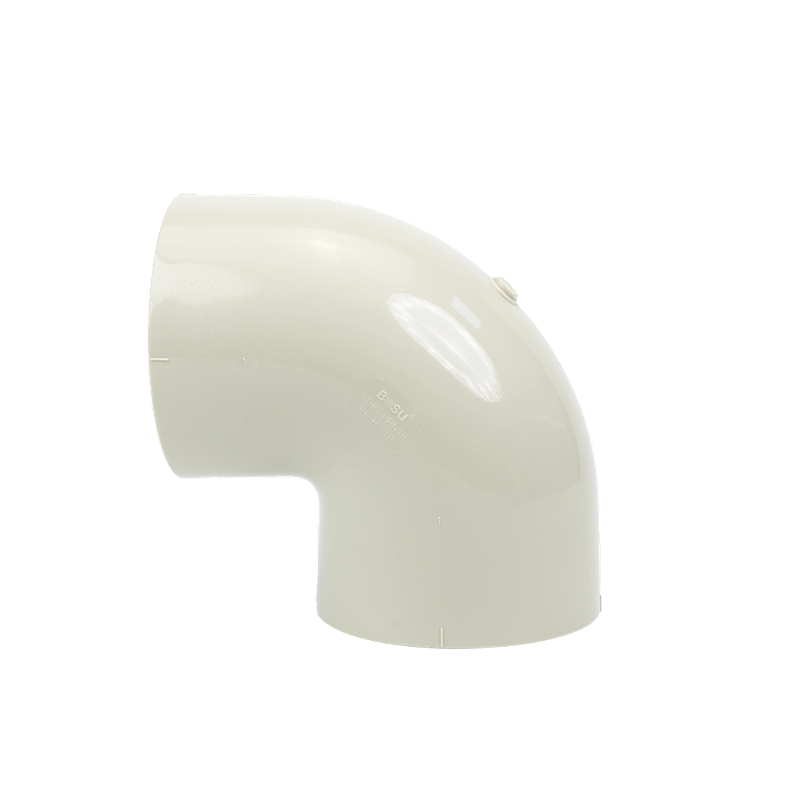
This butt-weld elbow delivers a sleek and high-end appearance after installation...
View More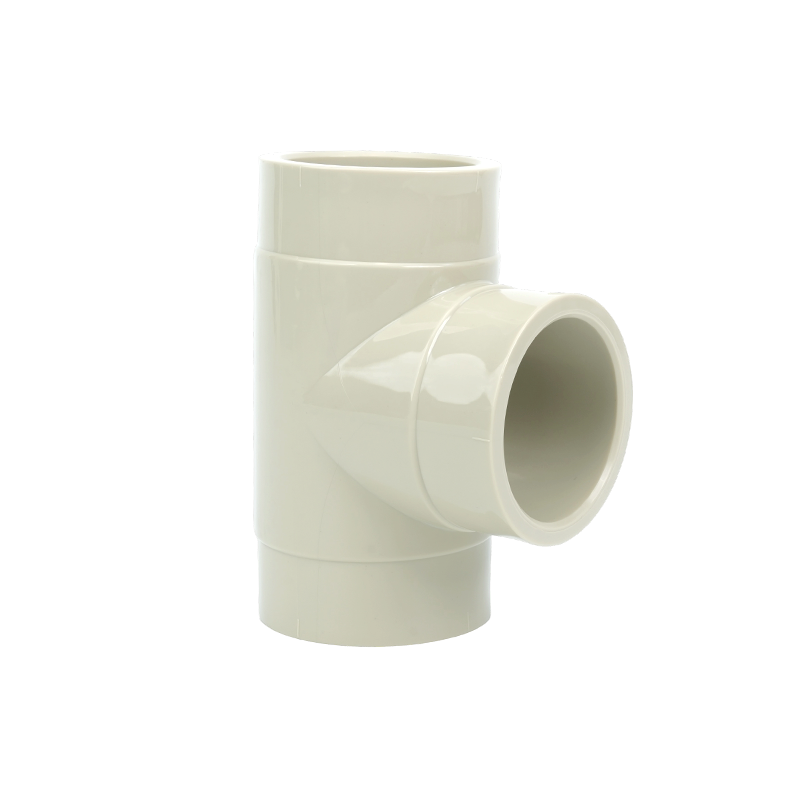
1. Excellent construction and significant high impact strength. 2. Light weight ...
View More
Products
Company Information
Address: No. 55 Haichuan Road, High-Tech Zone, Dongtai City, Jiangsu Province, China
Mobile: +86 137 7009 5258
Tel: +86-515-85479999
Email: [email protected]
We'd love to hear from you!
