 English
 中文简体
中文简体
β-PPH Internal Thread Straight Short Butt-Weld Fitting
1. This product features quick, secure, and efficient installation. Its smooth i...
View MoreContent
You just connected a new brass adapter to the outdoor spigot, tightened it snugly, and it still drips. The usual cause is not the washer or the wrench torque: it is a mismatch between thread standards. Most residential plumbing in North America uses tapered National Pipe Thread (NPT), while garden hose fittings use a straight thread called GHT, or Garden Hose Thread. The standard garden hose fitting dimension is 3/4-inch GHT, with a major thread diameter of roughly 26.99 mm (1.0625 inches) and 11.5 threads per inch. Once you know that one dimension and how to identify it, most watering-system connection problems become straightforward to diagnose.
Nearly every garden hose sold in the United States and Canada terminates in a 3/4-inch GHT coupling, regardless of the inner diameter printed on the hose. A hose labeled 5/8-inch or 1/2-inch describes the tube's inner diameter, not the end fitting. The couplings at both ends use the same 3/4 GHT thread so that hoses, splitters, nozzles, and adapters from different brands can connect to one another and to standard residential spigots. Before buying a new nozzle or splitter, it is worth confirming which standard your system actually uses.
| Hose inner diameter | Typical fitting thread | Common use |
|---|---|---|
| 3/8 inch | 1/2 GHT | Light-duty and specialty hoses |
| 1/2 inch | 3/4 GHT | Small residential hoses, patio watering |
| 5/8 inch | 3/4 GHT | Standard home watering, sprinklers |
| 3/4 inch | 3/4 GHT | Heavy-duty use, long runs, high flow |
The "3/4 inch" in the name does not mean the thread physically measures 0.750 inches. GHT is named after the nominal hose size, while the actual major diameter of a male 3/4 GHT thread is about 1.0625 inches (26.99 mm). This gap between the nominal designation and the measured dimension appears across the entire pipe and fitting industry, which is why buyers should verify physical dimensions rather than trusting a label alone.
Three thread families account for nearly every garden hose connection question: GHT, NPT, and BSP. GHT is a straight thread with a constant diameter; it seals by compressing a rubber washer against a flat surface, not by thread interference. NPT is a tapered thread that wedges itself tight and typically requires thread sealant. BSP (British Standard Pipe) is common in Europe, Australia, and parts of Asia; a 3/4 BSP thread measures 0.984 inches (24.99 mm) major diameter with 14 threads per inch.
| Thread standard | Major thread OD | Threads per inch | Thread profile | Sealing method | Common regions |
|---|---|---|---|---|---|
| 3/4 GHT | 26.99 mm | 11.5 | Straight | Rubber washer | North America |
| 3/4 NPT | 26.67 mm | 14 | Tapered | Thread interference | North America |
| 3/4 BSP | 24.99 mm | 14 | Straight or tapered | Washer or thread | Europe, Asia, Australia |
Major thread diameter of 3/4-inch nominal fittings (mm)
Measured major diameter at the widest point of the thread. Values are rounded to two decimals.
These differences explain common real-world failures. Wrapping Teflon tape around a GHT thread can actually cause a leak, because the tape prevents the rubber washer from seating. Forcing a BSP fitting into a GHT spigot produces a connection that starts but cannot seal. An NPT fitting may thread on for two or three turns, feel tight, and still drip.
Before buying adapters or replacement connectors, measure the fitting rather than guessing from the hose label. The process takes less than two minutes with a caliper and a thread gauge. The measurable dimensions that matter are the thread's outside diameter, the threads per inch, and the thread profile.
A quick reference: male thread OD of 26.99 mm with 11.5 TPI means GHT. A male thread OD of 24.99 mm with 14 TPI means BSP. A male thread OD near 26.7 mm with 14 TPI and a visible taper means NPT. This identification step is the difference between a connection that seals on the first try and an afternoon of repeated leaks.
Most garden hose systems use four connection formats: male ends that screw into female threads, female ends that accept a male spigot or hose end, quick-connect couplers that lock with a sliding collar, and repair couplings that splice two hose sections. The dimensions that matter for all of them are the thread size, usually 3/4 GHT, and the sealing surface, not the hex width or the overall connector length.
Fix most leaks by replacing the washer, aligning the two parts squarely before tightening, and stopping at hand tight plus a quarter turn. If a fitting still leaks with a fresh washer and clean threads, verify the thread standard using the measurement steps above before buying another adapter.
Garden hose connections work well because the pressure is low, the fluid is water, and the system is forgiving. Industrial plastic piping operates under different rules: aggressive chemicals, working pressures from 1.0 MPa up to 6 MPa, and repeated thermal cycling mean a poorly dimensioned joint can leak or fail in service. The same logic that makes 3/4 GHT a reliable consumer standard, controlled flank angles, correct pitch, and a proper sealing surface, is what makes socket depth, wall thickness, and bore dimensions critical in Beta-PPH, PPN, and PVDF systems.
When specifying industrial pipe, the nominal label is only the starting point. Wall thickness, socket depth, pressure class, and material grade must be verified against the actual operating conditions. We cover the points we review before recommending a material grade for a chemical or high-purity process in our article on key selection factors for piping components.
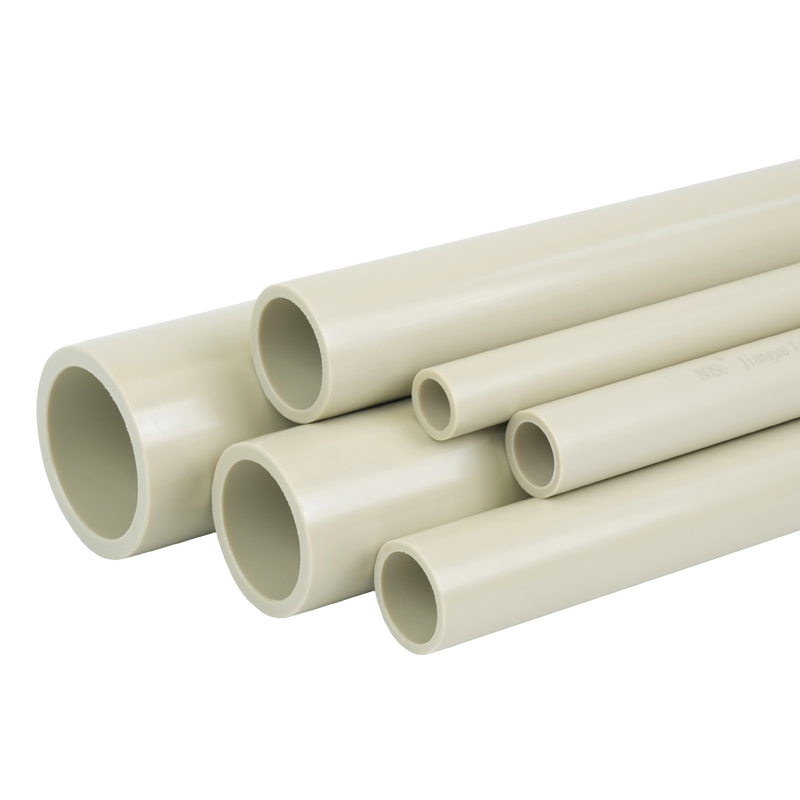 Beta-PPH Pressure Pipe Series with Controlled DimensionsThis pipe range covers DN15 to DN300 in pressure classes up to 6 MPa, with matched outer diameters and wall thicknesses for secure fusion joints. Useful when verifying material grade and socket depth for chemical or high-purity lines.View Product →
Jiangsu Leiting Precision New Material Co., Ltd. manufactures Beta-PPH, PPN, and PVDF pipes, fittings, and valves in pressure classes from 1.0 MPa to 6 MPa. Our pipe series is produced to controlled outer diameters and wall thicknesses, so each fusion joint lines up with the matching socket or butt weld fitting.
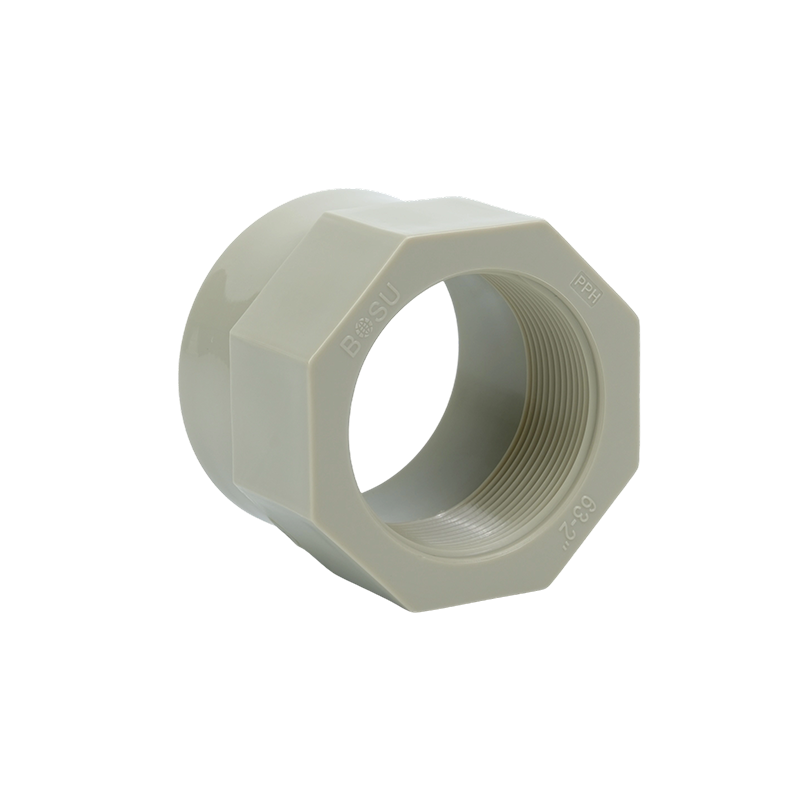 Precision PPH Fittings for Fusion-Jointed Piping SystemsExplore machined PPH elbows, tees, flanges, unions, and reducing connectors with tight socket tolerances and clear pressure markings. Ideal for confirming dimensional fit and rated pressure when assembling complete PPH pipeline systems.View Product →
Fittings deserve the same scrutiny as pipe. Whether you need 90-degree elbows, equal tees, flanges, or reducing connectors, the dimensional accuracy of the socket bore determines whether the welded joint will reach its rated pressure. Our PPH fitting series is machined to tight tolerances and marked with material and pressure class.
Complete systems also need reliable valves for isolation and flow control. Our double union ball valves and butterfly valves are built to the same dimensional standards as our pipe and fittings, which simplifies assembly and maintenance.
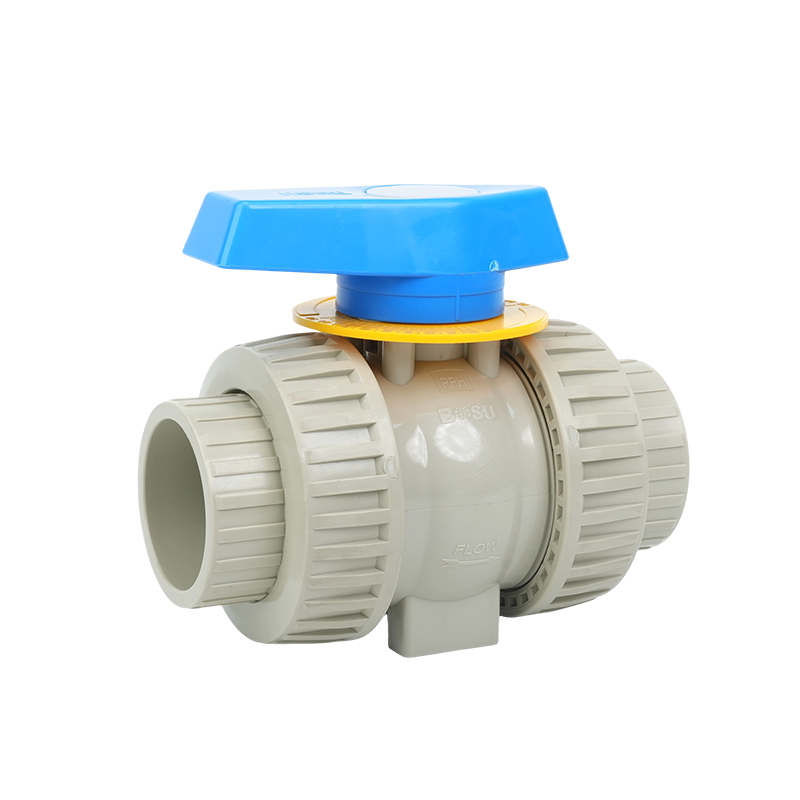 PPH Double Union Ball Valves with Actuator OptionsThese isolation valves match pipe and fitting dimensional standards, simplifying assembly. Available in manual, electric, pneumatic, and check configurations, they serve reliable flow control across chemical and process systems.View Product →
If you are moving from consumer hoses to an engineered piping system, or if you need to verify dimensions for a chemical, semiconductor, or water-treatment line, contact our engineering-support team with your operating pressure, temperature, and media. We will help you confirm the right pressure class and material grade for your process.
No. The dominant North American size is 3/4 GHT, but some light-duty and specialty hoses use smaller fittings, and many imported products use BSP threads. Always measure the thread before buying accessories.
TPI stands for threads per inch. GHT is standardized at 11.5 threads over each inch of thread length. That pitch identifies the thread as GHT and differentiates it from the 14-TPI NPT and BSP threads of similar diameter.
Not reliably. NPT is tapered and cut at 14 TPI, so it does not create a watertight seal in a straight GHT thread. The correct solution is a GHT-to-NPT adapter or a union designed for the transition.
The most common causes are a missing washer, a worn washer, cross-threading, or applying thread tape to straight GHT threads. If none of those apply, check whether the accessory is actually GHT or a BSP-threaded product.
A male 3/4 GHT thread has a major diameter of about 26.99 mm (1.0625 inches) with 11.5 threads per inch. A female GHT connector has a matching internal thread and seats a rubber washer at its base.
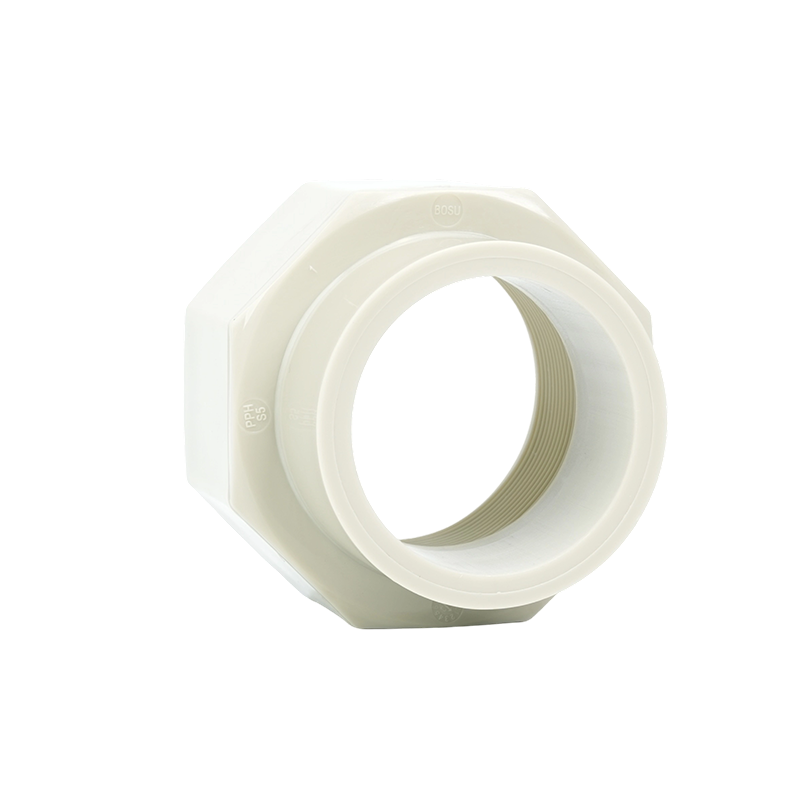
1. This product features quick, secure, and efficient installation. Its smooth i...
View More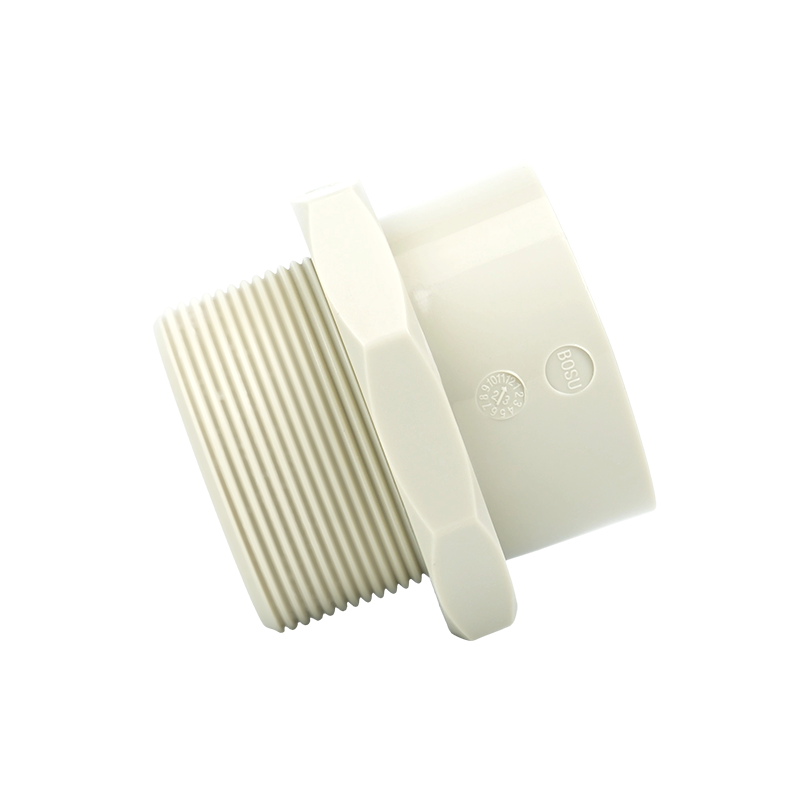
1. Fast connection, high pressure resistance, good sealing, safe and reliable wo...
View More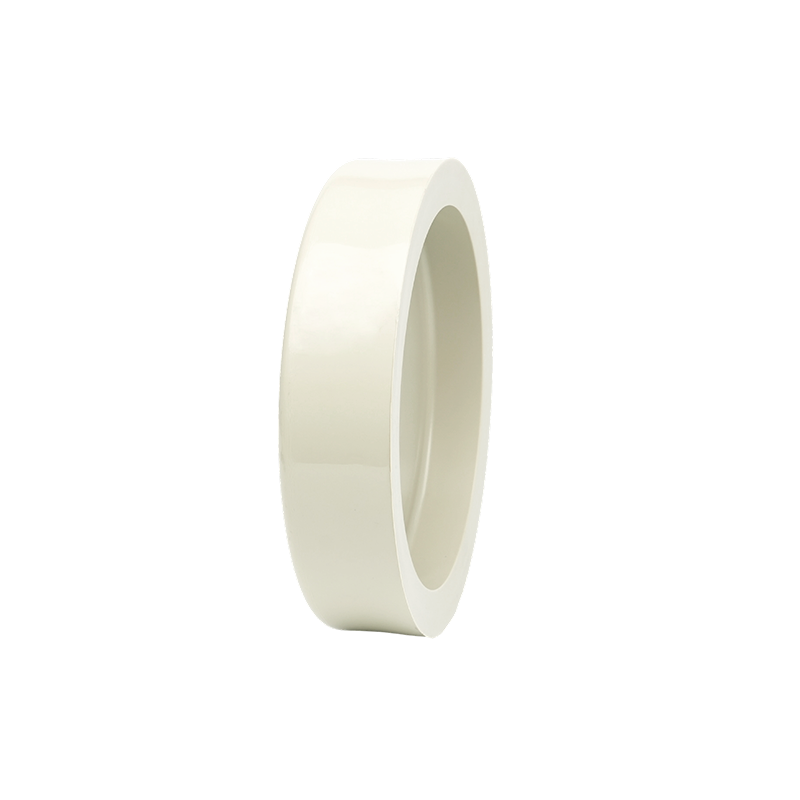
1. In addition to its basic closure function, the pipe cap can also be used for ...
View More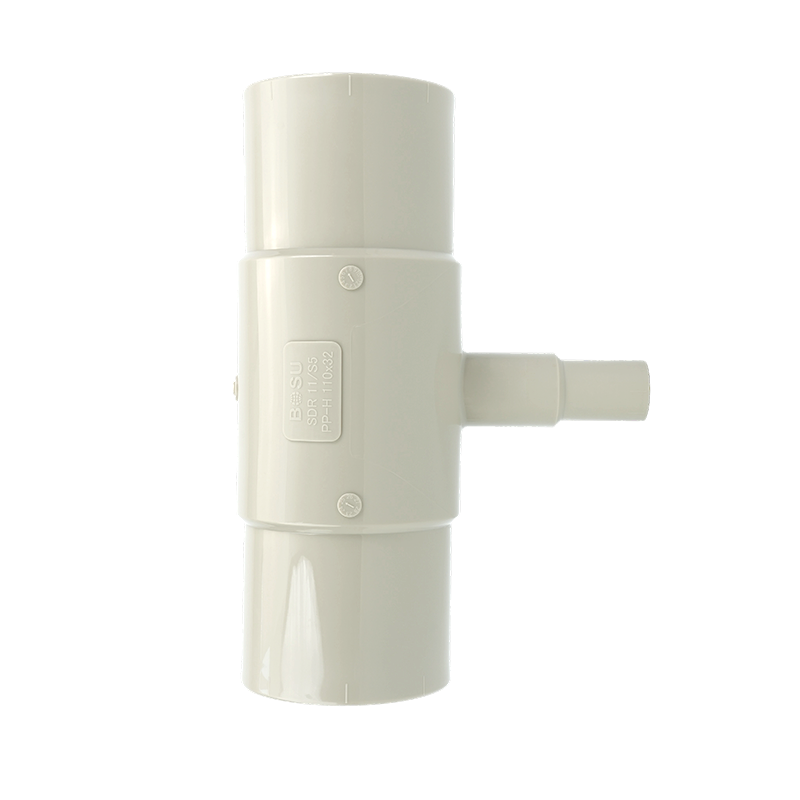
1. Designed for pipe extension, these fittings feature two identical ports and o...
View More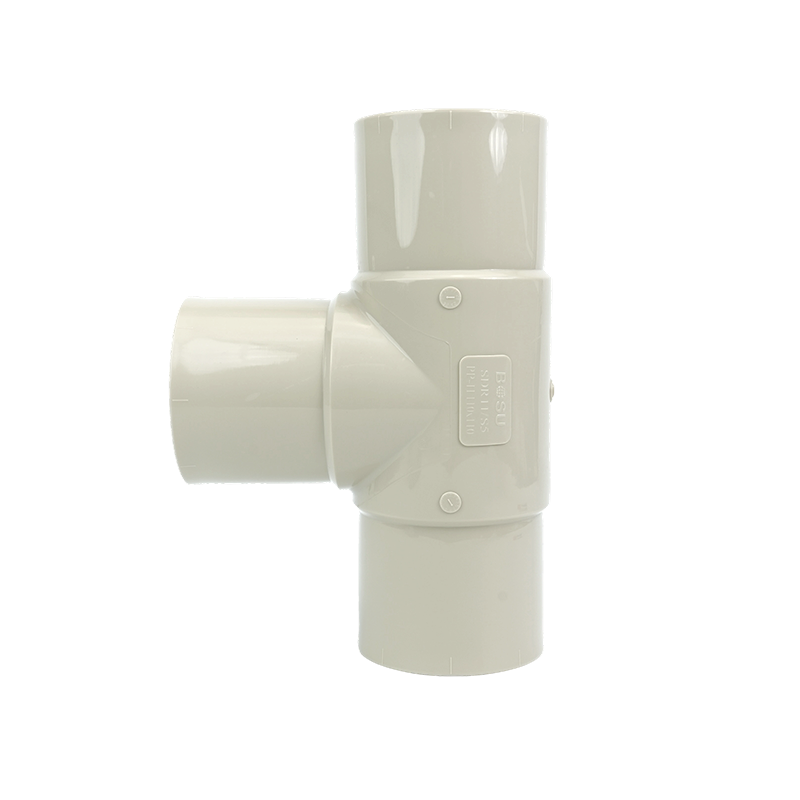
1. It features an elongated, streamlined profile with smooth internal and extern...
View More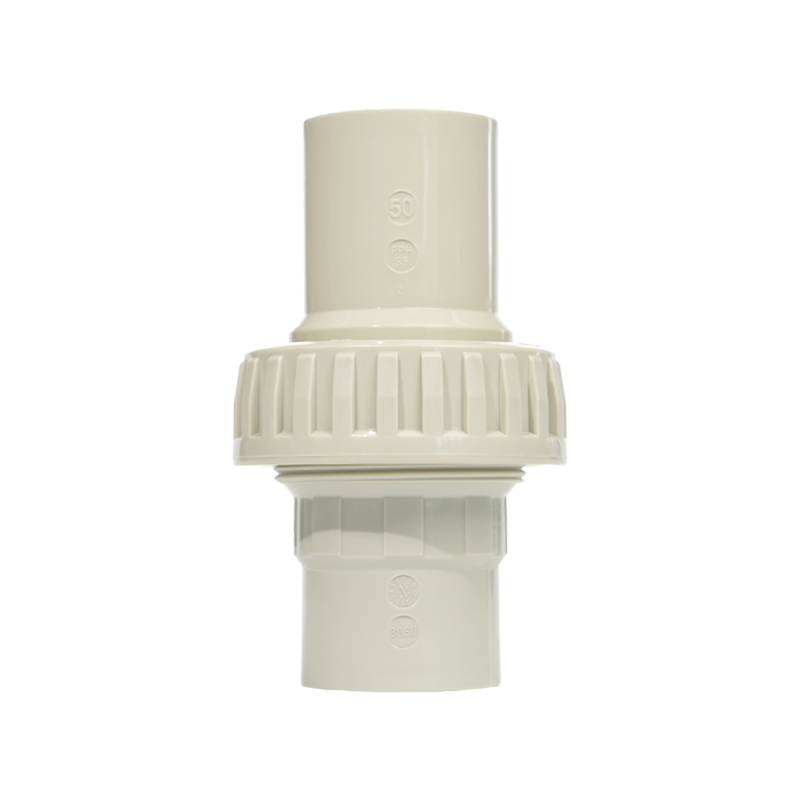
This union is used to connect pipes into a pipeline system. Product Specificatio...
View More
Products
Company Information
Address: No. 55 Haichuan Road, High-Tech Zone, Dongtai City, Jiangsu Province, China
Mobile: +86 137 7009 5258
Tel: +86-515-85479999
Email: [email protected]
We'd love to hear from you!
