Content
In the industrial landscape of 2026, the Raw Material Series has evolved beyond simple manufacturing inputs into a core metric for evaluating a company's technical depth and supply chain resilience. As global carbon neutrality targets intensify, the research and development of industrial polymer granules have entered an era of "molecular-level customization" and "full-lifecycle traceability."
The core conclusions for 2026 are clear: In extreme operating conditions, the matrix of raw materials—including PVDF, β-PPH, PPN, and CPVC—is leveraging composite modification technologies to break the performance monopoly of traditional metal materials. In particular, semiconductor-grade PVDF and ultra-high-strength β-PPH have become the keys to solving "bottleneck" issues in chip manufacturing ultrapure water systems and new energy chemical transportation.
To achieve optimal industrial configuration, the following table provides a detailed comparison of mainstream raw material series based on the latest 2026 industry standards and empirical data.
| Material Category | 2026 Technical Form | Long-term Temp (°C) | Creep Resistance (50yr) | 2026 Market Trend |
|---|---|---|---|---|
| β-PPH | Ultra-fine Crystal Modified | 0 ~ 95 | Extremely High (MRS 10) | Rising (Chemical Mainstream) |
| PVDF | High-Purity Emulsion Poly. | -40 ~ 140 | Excellent | Explosive (Semi/Lithium) |
| PPN | Homopolymer Standard | 0 ~ 80 | Moderate | Stable (General Manuf.) |
| CPVC | High-Chlorine Composite | -15 ~ 95 | Moderate | Stable (Fire/Thermal) |
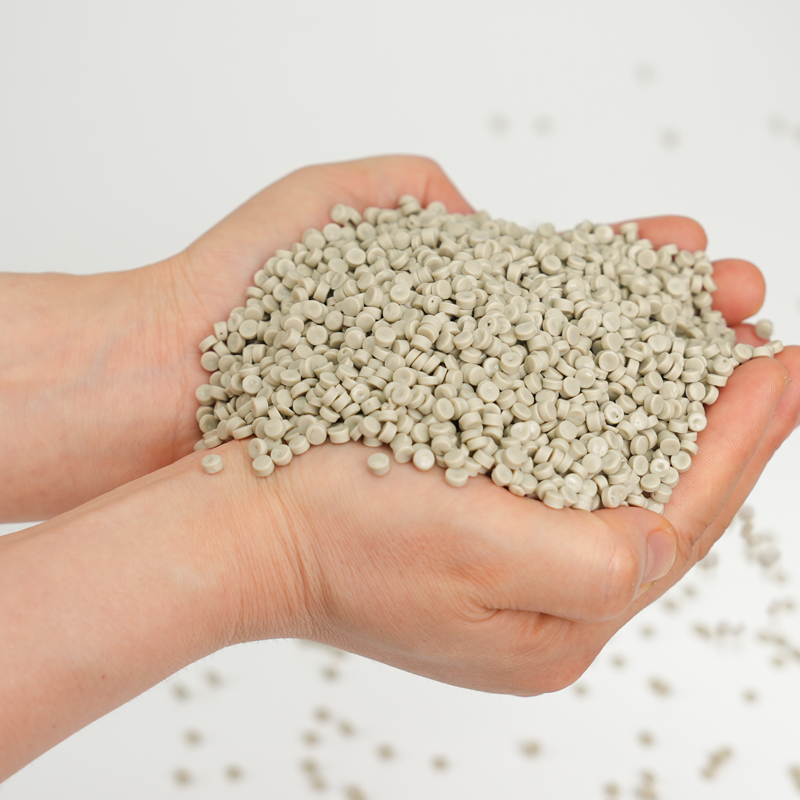
Traditional PP-H materials have gradually exited the core market in 2026, replaced by modified β-PPH granules with higher β-crystalline content (>85%). Through the mainstream "nucleating agent dispersion technology" of 2026, the notched impact strength of the raw material has increased by 40%. This ensures excellent toughness even at 0°C, solving the long-standing brittleness pain point of traditional polypropylene in cold-weather industrial operations.
According to 2026 hydrostatic strength tests from third-party laboratories, pipe fittings processed from premium β-PPH raw materials have a sustained pressure-bearing time at 80°C and 5.0 MPa hoop stress that significantly exceeds the industrial red line of 10,000 hours. This makes this series the most cost-effective choice for non-ferrous metal smelting, chlor-alkali industries, and steel mill pickling lines.
As chip manufacturing processes advance toward 1.4nm and 2nm nodes in 2026, the purity requirements for Ultrapure Water (UPW) delivery systems have become nearly absolute. The latest V-0 grade ultrapure PVDF granules have restricted metal ion leaching to <10 ppt (parts per trillion) and are certified for zero TOC (Total Organic Carbon) release. This breakthrough was achieved using the "supercritical fluid cleaning technology" implemented in the raw material production phase of 2026.
In 2026, global power battery capacity has surpassed 3TWh. PVDF remains the only efficient choice as a cathode binder due to its electrochemical stability. Additionally, in battery cooling systems, multi-way valves and connectors injection-molded from PVDF granules can withstand long-term electrolyte corrosion and thermal shock up to 150°C, ensuring the operational safety of electric vehicles.
With the widespread adoption of automated injection molding equipment in 2026, processing parameters for the "Raw Material Series" require more precise control to ensure finished products comply with the latest 2026 industrial safety codes.
For large-scale pipe fittings, we recommend choosing low melt-index granules with an MFI of 0.3 - 0.5 g/10min to enhance weld seam strength. For micro-valves with complex structures, raw materials with an MFI of 1.5 - 2.0 g/10min are necessary to ensure complete mold filling.
High-precision production lines in 2026 have universally adopted "Smart Moisture Monitors." Even for PPH granules with extremely low water absorption, a standardized drying period of 1.5 hours at 80°C is mandatory to keep moisture levels below 0.01%, effectively eliminating micropores in the final product.
In the volatile global trade environment of 2026, raw material selection is no longer just a pricing issue. Supply Chain Resilience and ESG Compliance have become new market entry barriers.
In summary, the 2026 Raw Material Series is characterized by "Ultra-purity, High-strength, and Digitalization." Whether addressing the extreme cleanliness challenges in semiconductors or the long-life requirements of the chemical industry, precisely understanding and applying the physical and chemical properties of these polymer granules is the only foundation for achieving a high-quality leap in manufacturing. Companies should not only focus on the purchase price but also deeply evaluate the comprehensive operational efficiency over the entire product lifecycle.

Products
Company Information
Address: No. 55 Haichuan Road, High-Tech Zone, Dongtai City, Jiangsu Province, China
Mobile: +86 137 7009 5258
Tel: +86-515-85479999
Email: [email protected]
We'd love to hear from you!

 English
 中文简体
中文简体