English
 中文简体
β--PPH Socket Fusion Pipe Plug
1. Durable, anti-corrosion, light weight, function as a closed pipeline, easy in...
View MoreContent
A 1-inch PVC screw plug costs less than a coffee, yet the wrong one can split the threaded boss on a filter housing and take a line down for a shift. On a dosing skid or a water-treatment header, that small threaded part is often the last thing specified and the first thing to leak. The specification sheet matters far more than the price list, because thread form, material grade and installation torque decide whether the joint stays dry for a decade or a fortnight.
The short answer: lock in the thread standard first (NPT, BSPT, BSPP or metric), check the body material against the actual media temperature rather than the ambient one, and treat torque as a number on a drawing instead of a feeling in the wrist. Everything below explains why those three decisions carry almost all of the risk, and where a thermoplastic plug from a PPH, PPN or PVDF range becomes the better engineering answer than PVC.
A screw plug is a male-threaded fitting that closes a threaded port. It is not the same part as a cap, which slips over a pipe end or a socket and is joined by solvent cement or fusion, and it is not a blind flange, which bolts to a flange face. Confusing the three is the most common reason a maintenance team receives the wrong item on a Friday afternoon.
Two head styles cover nearly all field use. The hex-head plug is driven with a wrench and carries the higher seating torque, so it belongs on pressure lines and on ports that must stay sealed through thermal cycling. The round head with a slot or knurl is hand-tightened only; it suits drain points, air bleeds, sample ports and low-pressure sumps where a tool would be an inconvenience rather than an advantage.
Typical locations include pool and aquarium manifolds, chemical drum and tank outlets, chiller and heat-exchanger headers, irrigation valve boxes, RO and filtration skids, and test ports on plastic valves. In almost every one of those spots the plug is a deliberate blank-off, not a permanent connection, so it will be removed and refitted several times over the life of the plant. That single fact should influence both the material choice and the sealing method.
A 1-inch NPT plug will start in a 1-inch BSPP port. It will go in a turn or two, feel roughly right, and then either leak under pressure or crack the plastic boss when the fitter keeps turning. Diameter alone tells you nothing useful; the thread family is the specification. Below 2 inches, most field failures on plastic ports trace back to a mixed thread family rather than to a defective part.
| Standard | Common marking | How it seals | Practical note |
|---|---|---|---|
| NPT (ASME B1.20.1) | NPT / MNPT | Tapered thread with PTFE tape or anaerobic paste | 60-degree thread angle, about 11.5 TPI at 1 inch; starts too easily in a parallel port |
| BSPT (ISO 7-1) | R / BSPT | Tapered thread with tape or paste | 55-degree angle, about 11 TPI at 1 inch; binds within one or two turns in an NPT port |
| BSPP (ISO 228-1) | G / BSPP | Parallel thread with an O-ring, washer or gasket | The thread itself does not seal; it needs an elastomer face to do the work |
| Metric and PG | M20 x 1.5, PG13.5 | Parallel thread with an O-ring | Frequent on instrument and cable entries, rare on pipe headers |
Tapered and parallel plugs are not interchangeable, even when the nominal size matches. A tapered plug wedges into the port and depends on deformation of both parts to seal; a parallel plug relies on a gasket shoulder and should never be forced deeper to stop a drip. If the port is part of a fabricated assembly, it helps to be clear on the basic functions of plastic pipe fittings before mixing thread families on a single header.
Two plugs sold as PVC can behave very differently. uPVC, also written PVC-U, is a rigid, unplasticised compound with excellent resistance to acids, alkalis, brine and most aqueous solutions, and it is the default for ambient water service. It softens progressively above about 45 degrees Celsius and should not be pushed past roughly 60. CPVC carries a higher chlorine content and holds useful strength to around 93 degrees, which is why it dominates hot-water and many chemical lines.
Neither grade tolerates chlorinated solvents, ketones, esters or aromatic hydrocarbons, and both are vulnerable to environmental stress cracking when a threaded joint is over-torqued in the presence of certain surfactants and oxidisers. Pressure ratings quoted in a catalogue assume 23 degrees; every degree above that reduces the safe working pressure of the assembly.
| Material | 23 °C | 40 °C | 60 °C | 80 °C | Practical ceiling |
|---|---|---|---|---|---|
| uPVC (PVC-U) | 100% | 80% | 50% | Not recommended | About 60 °C |
| CPVC | 100% | 90% | 72% | 50% | About 93 °C |
| PPH | 100% | 85% | 70% | 55% | About 100 °C |
| PVDF | 100% | 90% | 80% | 65% | About 140 °C |
Seal material is the second half of the specification. EPDM suits water, dilute acids and alkalis across a wide temperature band. FPM, often sold as Viton-type, is the better answer for oils, fuels and many aggressive chemicals but dislikes hot water and steam. A plug with a mismatched O-ring can fail while the body and thread remain perfectly sound.
Plastic threads are more forgiving of contamination than metal threads and far less forgiving of brute force. The sequence below reflects what a commissioning engineer would normally check on site.
Support matters on larger sizes. A 3-inch plug hanging off an unsupported plastic header will weep at the thread long before the fitting itself fails, because the joint is being loaded in bending rather than in tension.
Above roughly 60 degrees, in oxidising or high-purity service, or wherever the boss will see repeated thermal cycling, a PVC plug becomes the weak point in an otherwise well-built system. Beta-PPH plugs handle continuous service near 100 degrees and resist a broad range of acids and alkalis; PPN extends the pressure envelope to 6 MPa on the pipe side; PVDF covers the highest purity, the widest chemical range and temperatures approaching 140 degrees.
A hex-head plug with a hot-melt socket connection gives maintenance teams a wrenchable, reusable blank-off with the same footprint as the ball valves and check valves on the same header, which keeps spares simple. For a permanent blind end on a fusion-welded line, a socket fusion plug is the tidier choice because it removes the threaded joint altogether and with it the most common leak path.
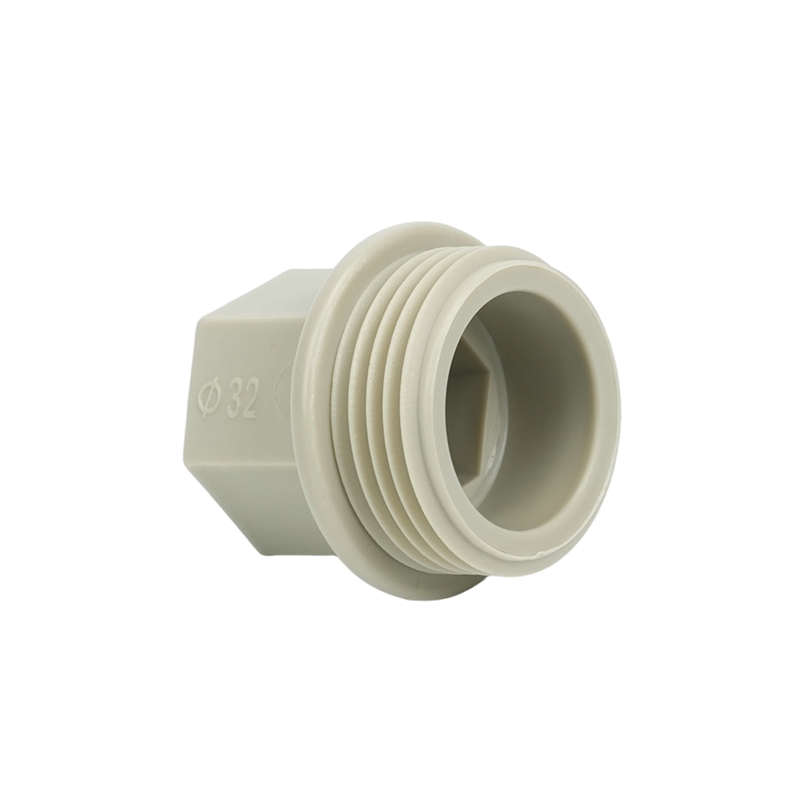 β-PPH Hex-Head Hot-Melt Socket Plug, 1.0 MPaA wrenchable hex-head blank-off for header spares, available DN15–DN25; confirm the 1.0 MPa rating against the line’s pressure class.View Product →
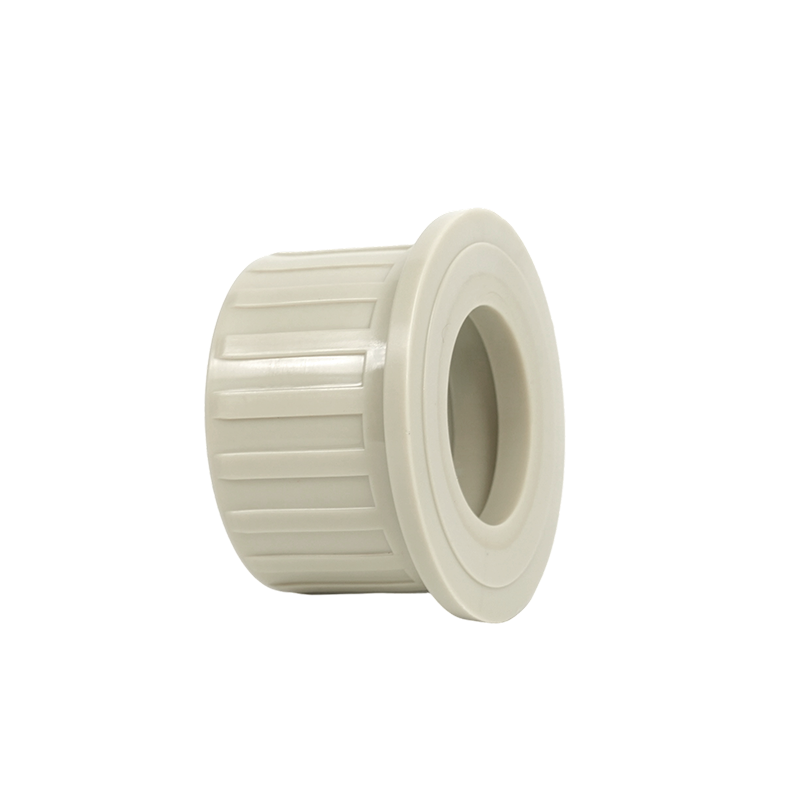 β-PPH Socket Fusion Pipe Plug, 1.0 MPaA socket-fusion plug for permanent blind ends that removes threaded joints; offered in DN15–DN25 within the 1.0 MPa β-PPH range.View Product →
Whichever route you take, keep the pressure class consistent along the run. A 1.0 MPa plug in a 1.6 MPa line is a deliberate derating decision and should be recorded as one, not discovered during a pressure test. Matching the plug to the PPH pipe range rated at 1.6 MPa avoids that conversation entirely.
Before releasing a purchase order for PVC screw plugs, confirm each of the following in writing. Each line corresponds to a failure mode that is expensive to fix after installation.
Ask for the third-party test report and the material certificate alongside the quotation. A reputable supplier will have them on file, and the request itself tells you how the order will be handled if something goes wrong later.
Only if the specific compound and the finished part carry the relevant potable-water approval for your market. General-purpose uPVC is chemically inert enough for water service, but the certification is what a health authority or a building inspector will ask to see.
It works, with care. Metal expands less than plastic under heat, so the joint can loosen on cooling, and a stainless plug will happily crack a plastic boss if it is over-tightened. Use tape, keep torque low, and re-check after the first thermal cycle.
Nine times out of ten the thread families differ, or the taper has been backed off to align the hex. Less often the port thread is damaged or the seal material is wrong for the medium. Replacing the plug rarely fixes a mismatch.
A plug has an external thread and screws into a port. A cap fits over a pipe end or into a socket and is joined by solvent cement or fusion. They are not interchangeable, and ordering the wrong one is a common source of delay.
1. Durable, anti-corrosion, light weight, function as a closed pipeline, easy in...
View More
1. Durable, anti-corrosion, light weight, function as a closed pipeline, easy in...
View More
The pneumatic actuator operates at a very high speed, which significantly reduc...
View More
This product is applicable in piping systems operating under low pressure and wh...
View More
Products
Company Information
Address: No. 55 Haichuan Road, High-Tech Zone, Dongtai City, Jiangsu Province, China
Mobile: +86 137 7009 5258
Tel: +86-515-85479999
Email: [email protected]
We'd love to hear from you!