English
 中文简体
β--PPH Single and Double Type Pneumatic Flanged Ball Valve
The pneumatic actuator operates at a very high speed, which significantly reduc...
View MoreContent
A 110 mm PVC flange on a brine line starts weeping three weeks after commissioning. The bolts feel tight, the pipe is sound, and the gasket matched the size on the drawing. In most cases like this, the gasket itself is not faulty — the selection is. An EPDM pad went onto a stream carrying oil mist, a full-face gasket was clamped onto a raised face, or a PTFE-faced gasket was never re-torqued after the first thermal cycle.
Short answer: choose a PVC gasket in this order — medium and concentration first, continuous temperature second, flange face and dimensions third, compression control last. Get that order right and a 3 mm EPDM or PTFE-faced gasket outlasts the pipe. Get it wrong and even a perfectly moulded gasket will leak.
Most buyers start with price per piece, or with "the same one we used last time". A more reliable sequence looks like this:
The last item is where inexpensive joints fail. An elastomer gasket seals only inside a compression window, roughly 20–30 % of its thickness. Below that it cannot fill the surface finish; above it, the rubber extrudes and takes a permanent set.
Three gasket families cover most thermoplastic piping work, and the differences are practical rather than academic.
| Gasket type | Continuous temperature | Typical media | Watch-outs |
|---|---|---|---|
| EPDM | -40 to +90 °C, short peaks near 110 °C | Water, brine, dilute acids and alkalis, cooling water, wastewater | Swells in mineral oils, many solvents and some concentrated oxidisers; avoid aromatic and chlorinated hydrocarbons |
| EPDM with PTFE facing | -40 to +120 °C | Aggressive chemicals, solvents, high-purity and pharmaceutical lines | PTFE cold-flows, so re-torquing matters more; the facing must not be cracked at the bolt holes |
| FPM (FKM) | -20 to +200 °C | Oils, fuels, acids at higher temperature, many solvents | Poor with hot water, steam and amines; limited low-temperature flexibility; higher cost |
Two details matter more than any datasheet table. First, flexible PVC compounds contain plasticisers that can migrate into EPDM over time, while rigid PVC, β-PPH and PVDF flange faces present no such problem — one reason elastomer pads behave so consistently in PPH and PVDF systems. Second, hardness: a 70 Shore A pad is the general-purpose choice; softer compounds conform better to a slightly scored face but extrude more easily under bolt load.
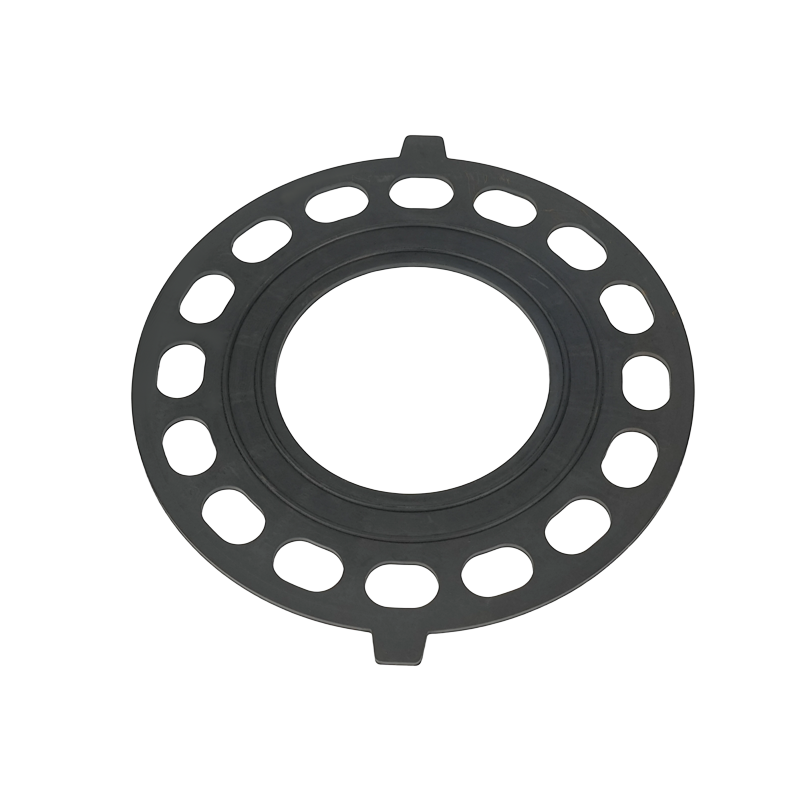 EPDM Flange Pad for DN15–DN300EPDM flange pad in DN15–DN300 sizes; useful when checking elastomer compatibility with PVC, PPH, and PVDF flange faces in mixed-material joints.View Product →
Sealing elements other than flat gaskets follow the same material logic, so a comparison of how pressure ranges differ between seal materials is a useful cross-check when a joint combines an O-ring groove with a flat flange elsewhere on the same skid.
Thermoplastic flanges are usually a stub end plus a backing ring, so the sealing face is flat and relatively soft. That makes two dimensions critical. The gasket OD should sit inside the bolt circle but cover the full sealing land, typically matching EN 1092-1 or ASME B16.5 dimensions for the nominal size and pressure class. The gasket ID should clear the bore by about 1–2 mm: too small and the gasket intrudes into the flow, collects scale and eventually tears; too large and the medium reaches the bolts and creeps along them.
Thickness is a trade-off, not an upgrade. A 1.5 mm pad suits small bores and low pressure where bolt load is limited; 3 mm gives more conformability on a scored or slightly warped face, but demands more bolt load and creeps more. On DN50 and below, a 3 mm EPDM pad pulled to the same torque as a 1.5 mm one will often bulge into the bore.
Plastic flanges behave differently from steel ones. The backing ring and stub end are viscoelastic: bolt load relaxes over hours and again after the first temperature cycle, so a joint that passes a ten-minute pressure test can weep on day eight. Practical countermeasures:
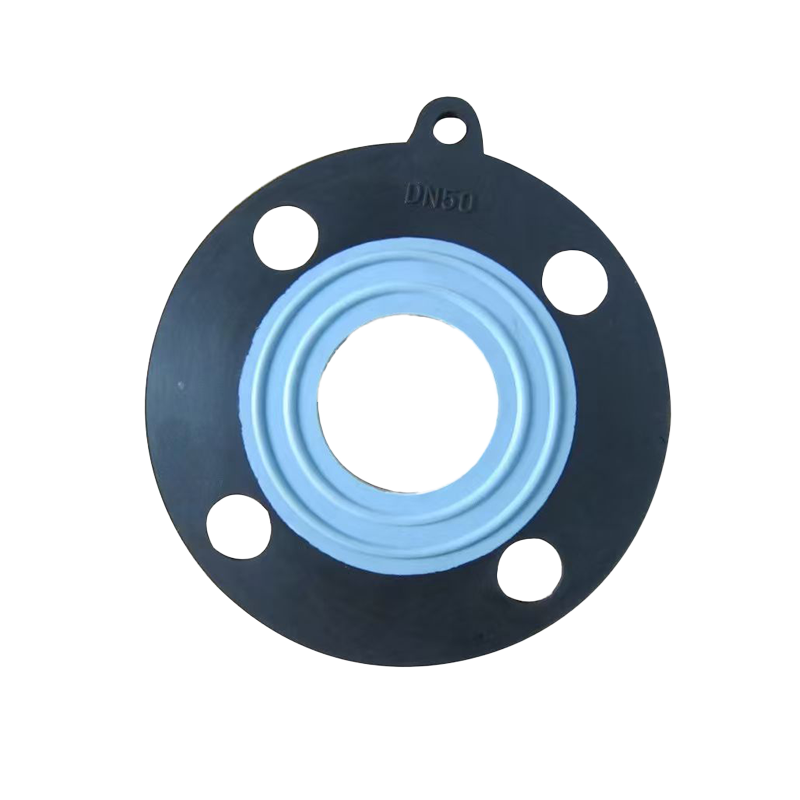 EPDM+PTFE Flange Pad for DN15–DN300EPDM+PTFE flange pad from DN15 to DN300; worth reviewing for plastic flange joints where bolt-load relaxation and backing-ring protection are concerns.View Product →
Washers spread the load and protect the plastic backing ring. Over-torque is a genuine risk on thermoplastics: the flange cracks before the gasket ever reaches ideal compression, and the crack usually appears as a fine radial line beside a bolt hole.
When a joint leaks, the gasket is often the second problem, not the first. These five causes account for most repeat failures on thermoplastic lines:
No. Once compressed, an elastomer gasket takes a permanent set and will not return to its original thickness. Reusing one is the quickest way to turn a dry joint into a leaking one.
EPDM is outside its comfort zone. A fluoroelastomer pad holds up to roughly 200 °C where the medium is compatible, for example oils and many solvents. Above that, look at PTFE-faced options and check the pressure de-rating of the flange itself, not only the gasket.
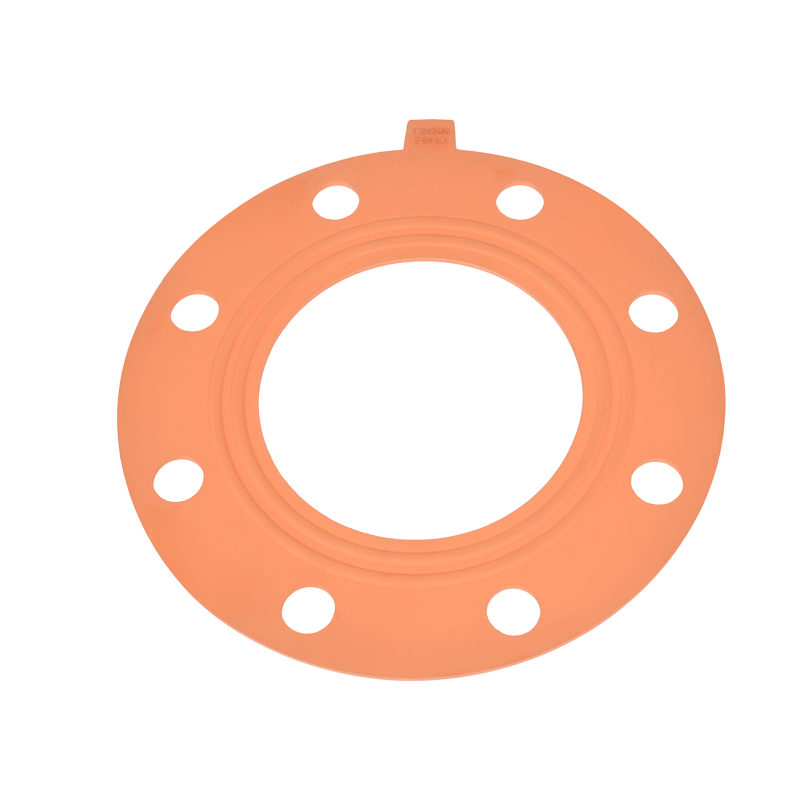 FPM Flange Pad for DN15–DN300FPM flange pad available in DN15–DN300 sizes; a fluoroelastomer option to consider when EPDM is outside its temperature comfort zone.View Product →
Only loosely. EPDM is usually black and FPM often dark green or brown, but compounds vary between producers. Ask for the material certificate rather than judging by appearance.
Start with the flange and gasket supplier's figure, then verify with a leak test and a re-torque check after 24 hours. If no figure is available, torque a sample joint low, inspect the gasket for even compression across its full width, and increase in small steps.
Leiting manufactures EPDM, EPDM+PTFE and FPM flange gaskets alongside β-PPH/PPH, PPN and PVDF pipes, fittings and valves, so the gasket and the flange face are matched before they leave the factory. If you are specifying for a brine, chemical or high-purity line, send the medium, concentration, continuous temperature, pressure class and flange standard, and the gasket type, thickness and torque figure can be confirmed against your actual joint.
Contact our technical team with the line data, or include the flange drawing and bolt circle dimensions with your enquiry.
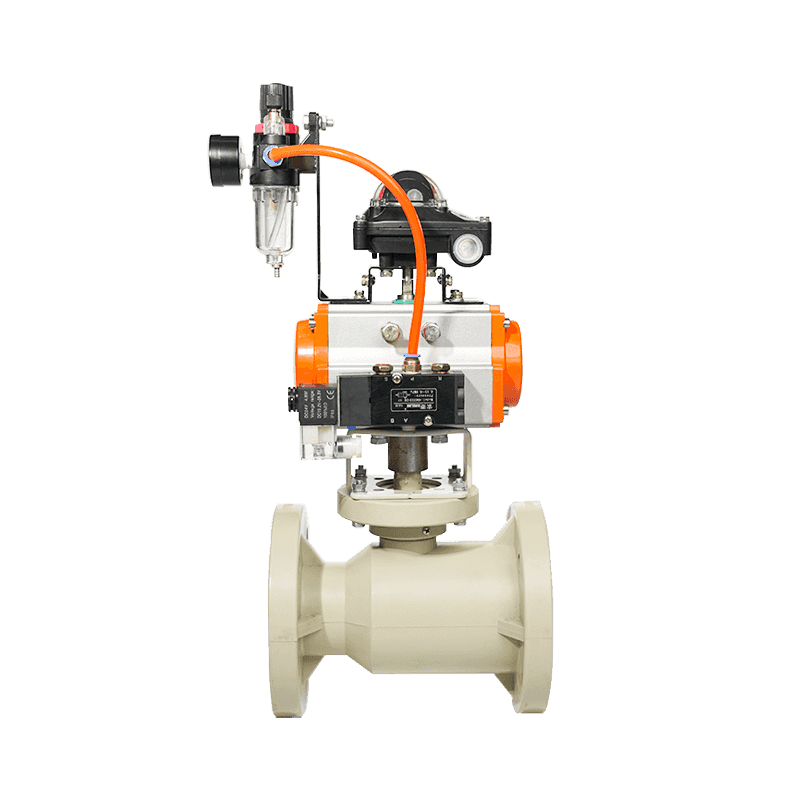
The pneumatic actuator operates at a very high speed, which significantly reduc...
View More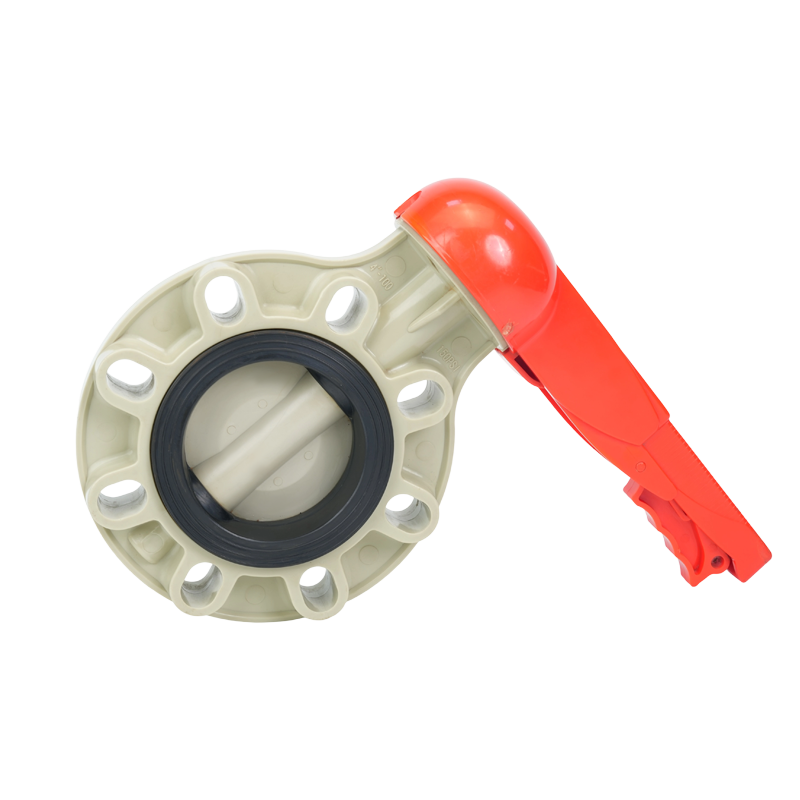
Easy to open and close, low fluid resistance, and simple structure. When fully ...
View More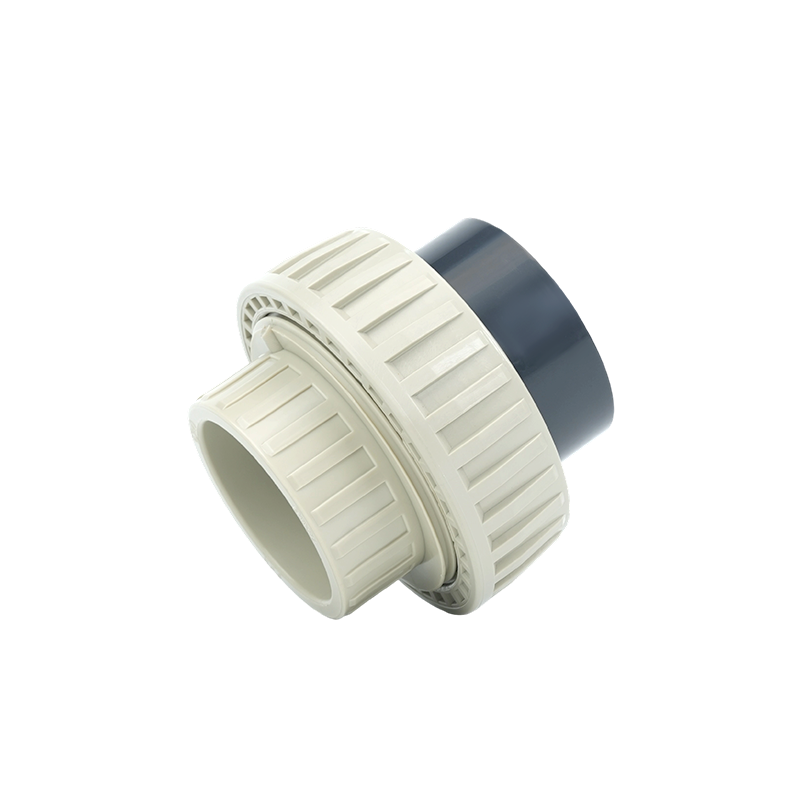
Description: This thermoplastic union fitting connects pipes into a complete pip...
View More
Products
Company Information
Address: No. 55 Haichuan Road, High-Tech Zone, Dongtai City, Jiangsu Province, China
Mobile: +86 137 7009 5258
Tel: +86-515-85479999
Email: [email protected]
We'd love to hear from you!