 English
 中文简体
中文简体
β--PPH Socket Fusion Union Pipe Fitting 1.0MPa with EPDM/FPM Seal
This fitting is designed to connect pipes into a pipeline system. It is suitable...
View MoreContent
A welded plastic pipeline almost never fails at the weld; it fails where something was threaded into it. That pattern repeats across chemical plants, water-treatment skids and semiconductor wet benches: the β-PPH or PVDF line runs quietly for years, then a joint at a pump port, pressure gauge or tank nozzle starts to weep. In nearly every case the fitting involved is a coupling with thread, and the cause is rarely the fitting itself — it is the thread standard, the seal, or the torque. The short answer up front: use a threaded coupling wherever a line must be opened again, connected to threaded equipment, or transitioned to metal hardware; use a fused joint everywhere else. The rest of this page explains the thread standards that decide whether a joint seals, the pressure and temperature limits plastic threads impose, and the checks that keep a threaded joint dry for its whole service life.
A coupling is the shortest fitting that joins two pipe lengths into one continuous run. A coupling with thread does that job through matched male and female threads instead of heat or cement. In plastic piping ranges the same idea appears under three familiar names: the internal thread straight, which ends a welded run in a female-threaded port; the external thread straight, which ends it in a male thread; and the union, a three-piece threaded coupling whose body, tailpiece and nut let a technician break the joint with two wrenches instead of a saw.
That reversibility is the whole point. A socket-fusion coupling produces a joint as strong as the pipe but permanent; a threaded coupling trades a little strength to buy serviceability. Give threaded joints the jobs they do best: equipment interfaces such as pump ports, gauge roots and sampler points; maintenance breaks where a skid or filter must come out for cleaning; and the transition between a plastic system and metal hardware. For a wider view of how every fitting type earns its place in a line, this overview of the main functions of plastic pipe fittings is a useful companion.
The most common reason a threaded joint weeps is not poor workmanship but two incompatible thread standards meeting in one joint. NPT, with its 60° tapered form, dominates North American equipment; BSPT (designated R), with a 55° taper, is widespread in Europe and Asia; BSPP (G or Rp) and metric threads are parallel and rely on a face seal rather than thread interference. A tapered male crushes its flanks against the female as it enters, which is why it can seal with tape or paste. A parallel thread leaves a spiral gap that no amount of tightening can close — only an O-ring, gasket or bonded seal belongs there. Pitch rarely matches across systems even when nominal sizes look identical, so an NPT male may start smoothly into a BSPT female, feel tight, and still leak on the first pressure test. Verify the standard on both halves of every joint before ordering, not after.
| Standard | Thread form | How it seals | Where you meet it |
|---|---|---|---|
| NPT / NPTF | 60° tapered | Flank interference plus tape or sealant | North America |
| BSPT (R) | 55° tapered | Flank interference plus tape or sealant | Europe, Asia |
| BSPP (G / Rp) | 55° parallel | Face seal: O-ring, gasket or bonded seal | Europe, Asia |
| Metric (M) | 60° parallel | Face seal on instrument and sensor ports | Equipment worldwide |
Most damaged plastic threads are created by metal fitters acting on habit. Three steel-world instincts transfer badly to β-PPH, PPN and PVDF: wrenching past hand-tight, winding thread tape without restraint, and screwing a rigid metal nipple into a plastic body that will lever and crack as temperatures move. Plastic thread forms carry generous clearance by design; the seal comes from tape, paste or a moulded seal ring, never from crushing the flanks. The working rule: tighten until the joint resists, then a quarter to half a turn more. Keep tape off the first two threads so shreds cannot travel into the medium, and choose ring-sealed unions for joints that will be opened regularly, because a union with EPDM or FPM seals re-tightens indefinitely while a taped thread does not.
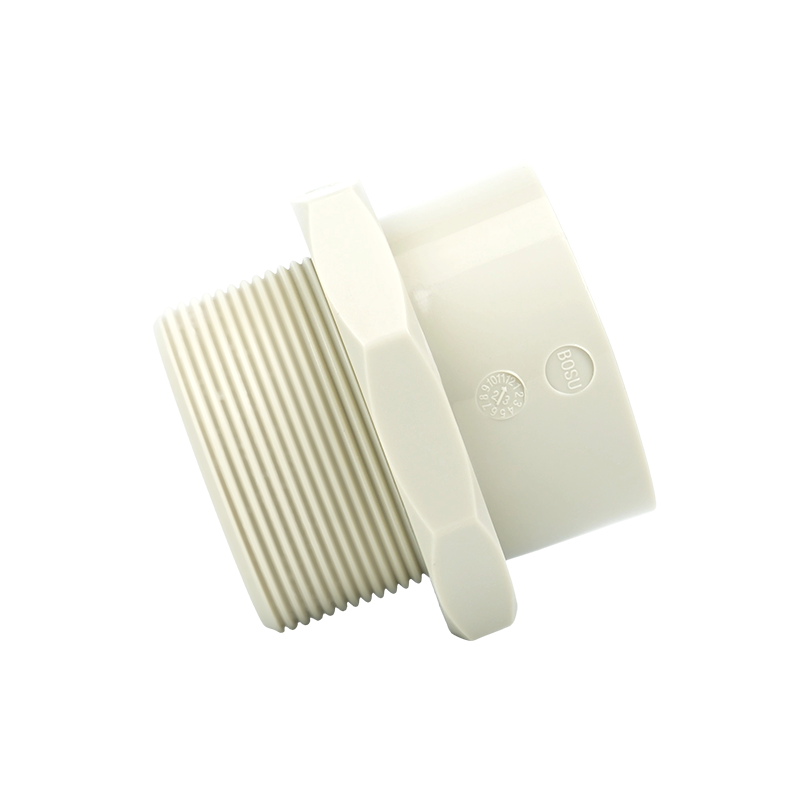 β-PPH External Thread Straight Short Butt-Weld FittingThis butt-weld fitting combines a plastic external thread with a welding spigot, allowing threaded connections while avoiding the over-tightening habits that damage plastic joints.View Product →
 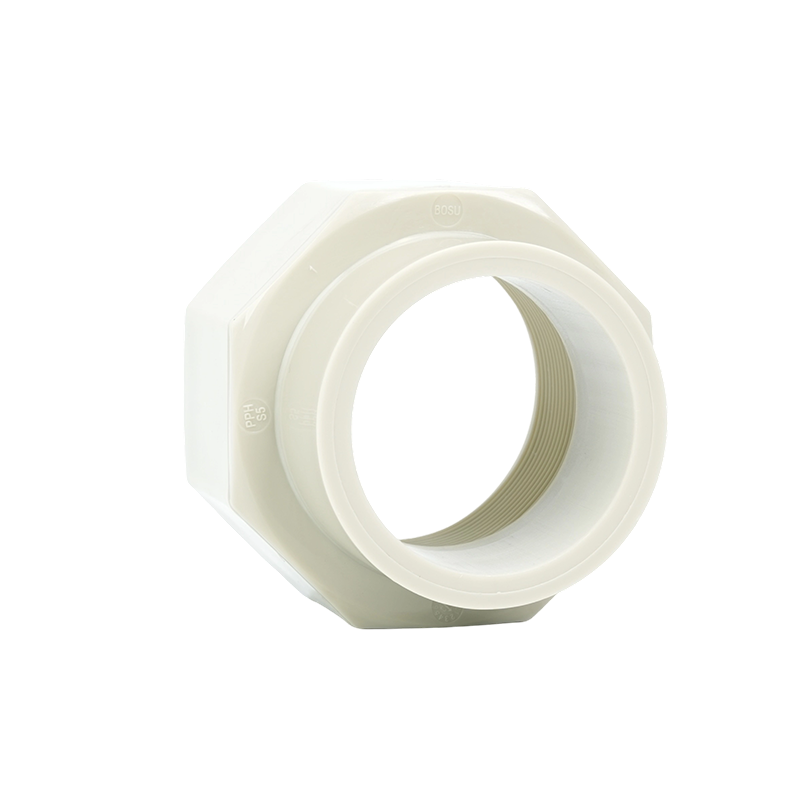 β-PPH Internal Thread Straight Short Butt-Weld FittingWith a moulded internal thread and butt-weld end, this fitting accepts threaded inserts safely, complementing guidance on gentle tightening and proper sealing of plastic threads.View Product →
Service records on plastic piping tell a consistent story: assembly error, not material fatigue, causes the majority of threaded-joint leaks. The pattern below reflects typical field experience.
Illustrative distribution of threaded-joint leak causes in plastic piping service; actual proportions vary by plant and medium.
Let the lowest-rated component set the line pressure, and expect threaded elements to sit near the bottom of the range. In one manufacturer's range, β-PPH pipes top out at 1.6 MPa while PPN and PVDF pipes reach 6.0 MPa at ambient temperature, and fittings follow the 1.0 and 1.6 MPa tiers. A threaded connection then takes a further discount, because the wall at the thread is thinner than the pipe wall. Size unions and threaded straights for the system's actual working pressure plus a sensible margin — never read the pipe rating onto every component in the run.
Maximum nominal pressure rating by pipe material at 20 °C: β-PPH 1.6 MPa, PPN 6.0 MPa, PVDF 6.0 MPa.
Every rating above assumes water at 20 °C. Raise the temperature and the allowable pressure of thermoplastics falls steeply: a line rated 1.6 MPa at ambient retains well under half of it by 80 °C, which is exactly the territory of hot chemical loops and CIP circuits. Treat the curve below as a first-order guide, then confirm final figures against the manufacturer's pressure tables before fixing pump discharge pressures or relief-valve settings.
Illustrative de-rating of a thermoplastic pipe's ambient pressure rating as water temperature rises; confirm exact values in the manufacturer's pressure tables.
Decide the connection method by the job, not by habit: threaded couplings win on serviceability at small and medium bores, fusion wins on permanent strength in buried or concealed runs, and flanges win on large diameters and equipment nozzles. The trade-offs sit side by side below.
| Criterion | Threaded coupling | Socket-fusion joint | Flanged connection |
|---|---|---|---|
| Tools needed | Hand tools | Fusion machine | Torque wrench |
| Reversible | Yes, by design | No | Yes, with a new gasket |
| Pressure at temperature | Lower — thin thread walls | Full pipe strength | High, gasket-dependent |
| Best role | Equipment ports, maintenance breaks, transitions | Long concealed runs | Large bores, pumps, tanks |
When the decision is close, weigh the medium, the temperature, how often the joint will be opened, and who will service the line — the same factors that matter when choosing pipe fittings for a chemical or industrial line in the first place.
No. Their flank angles (60° versus 55°) and pitches differ, so the parts may assemble partway and seal badly. Match standards on both sides of the joint, or use a purpose-made adapter.
Sparingly, and never on the first two threads. On tapered plastic threads the tape fills the clearance; on ring-sealed unions it is unnecessary — the EPDM or FPM seal does the work and survives repeated opening.
Thermal movement relaxes a taped joint and changes the clamp on parallel threads. Check that the seal material tolerates the medium temperature, that the joint is not a parallel-to-taper mismatch, and that the assembly is not being stressed by rigid pipework.
No. Treat every threaded point as the weakest link in the run and size the system to it. Where full pipe strength is non-negotiable, fuse the joint and keep threads only at service points.
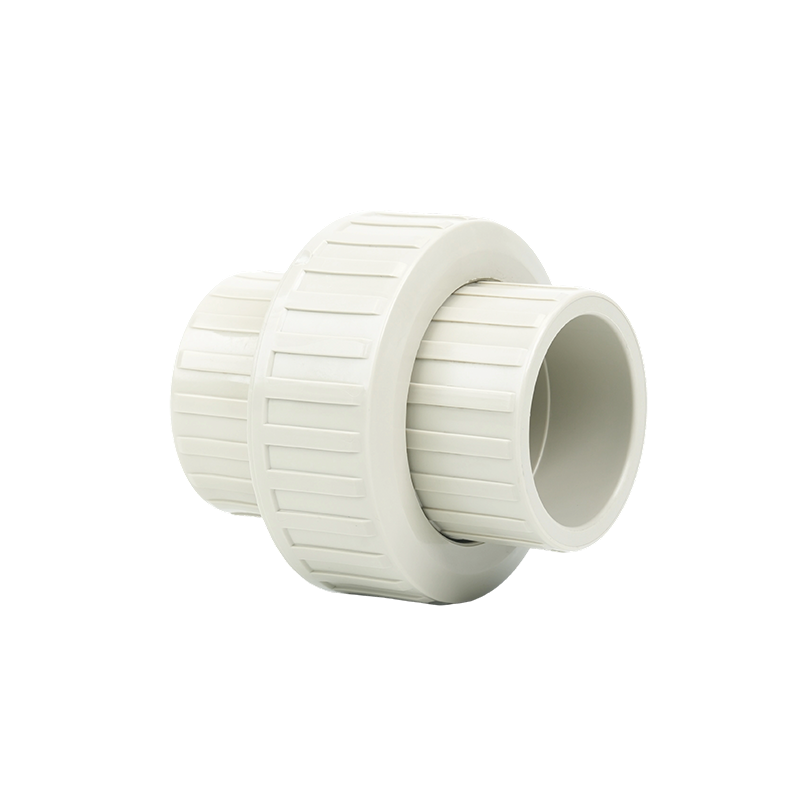
This fitting is designed to connect pipes into a pipeline system. It is suitable...
View More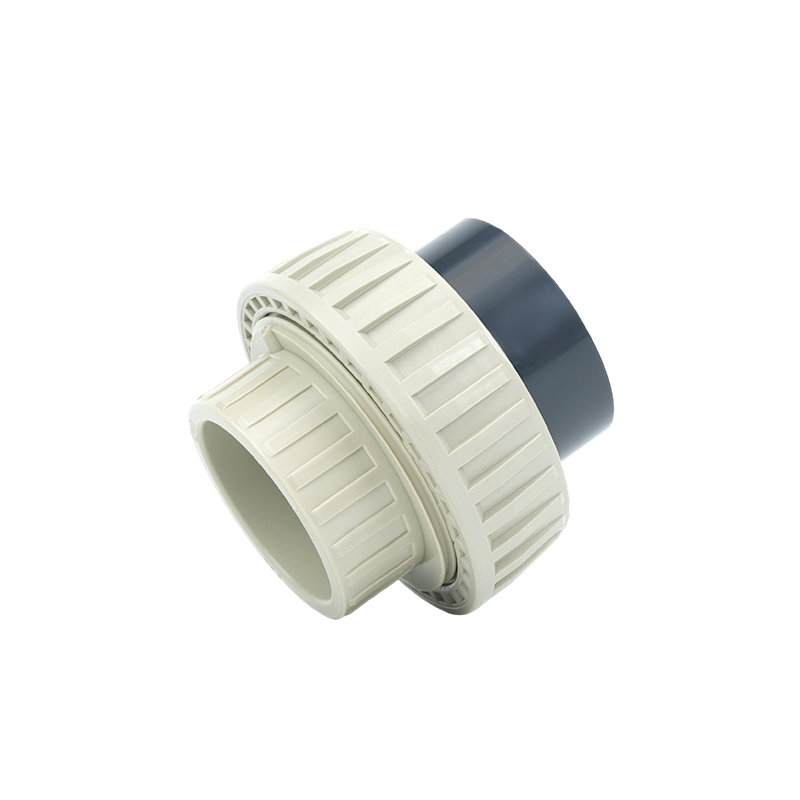
Description: This thermoplastic union fitting connects pipes into a complete pip...
View More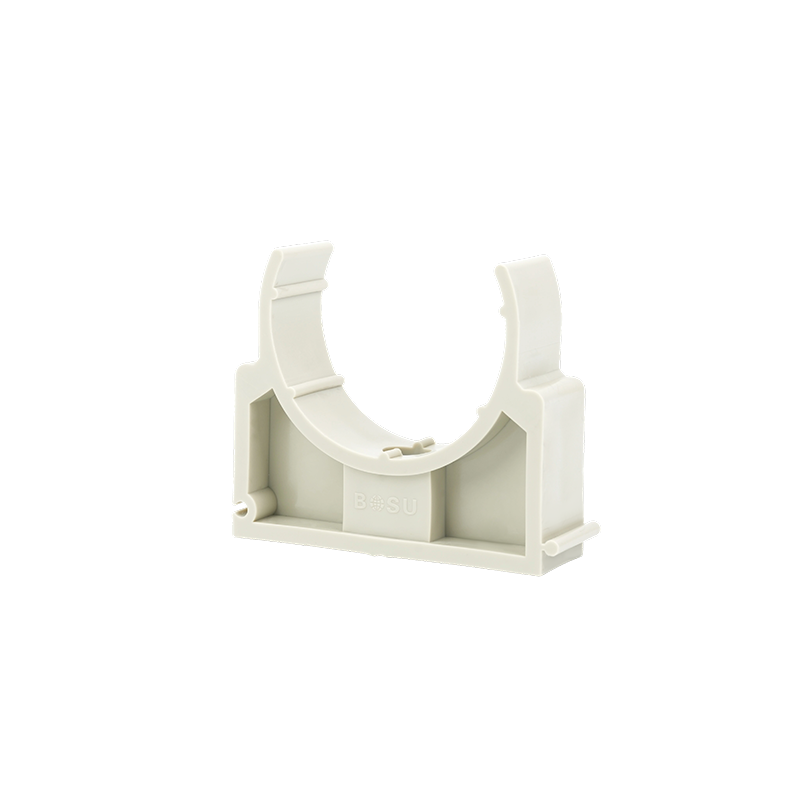
Product Specifications: DN15 (D20), DN20 (D25), DN25 (D32), DN32 (D40), DN40 (D5...
View More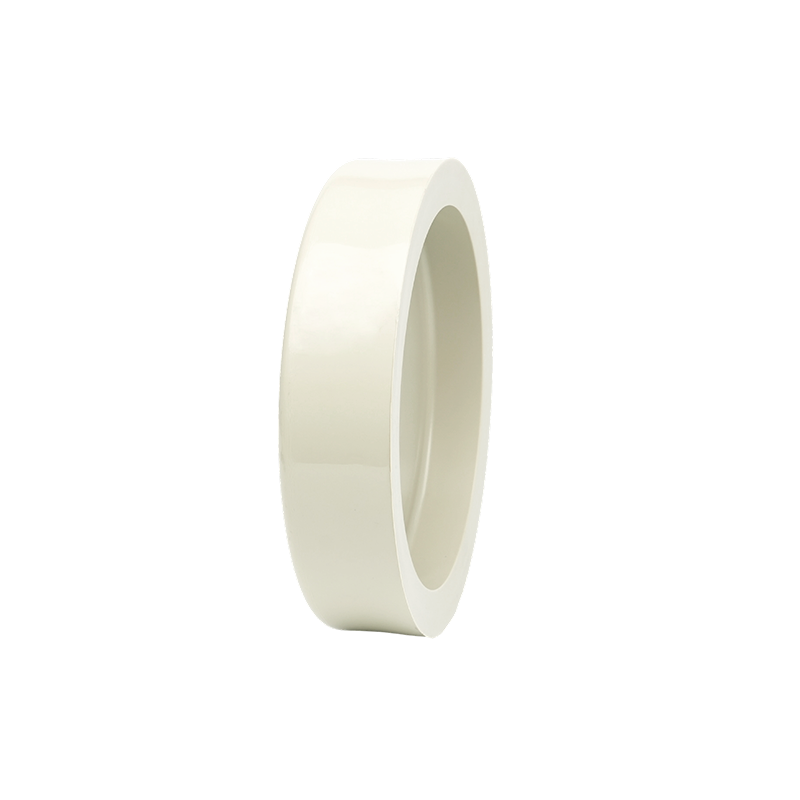
1. In addition to its basic closure function, the pipe cap can also be used for ...
View More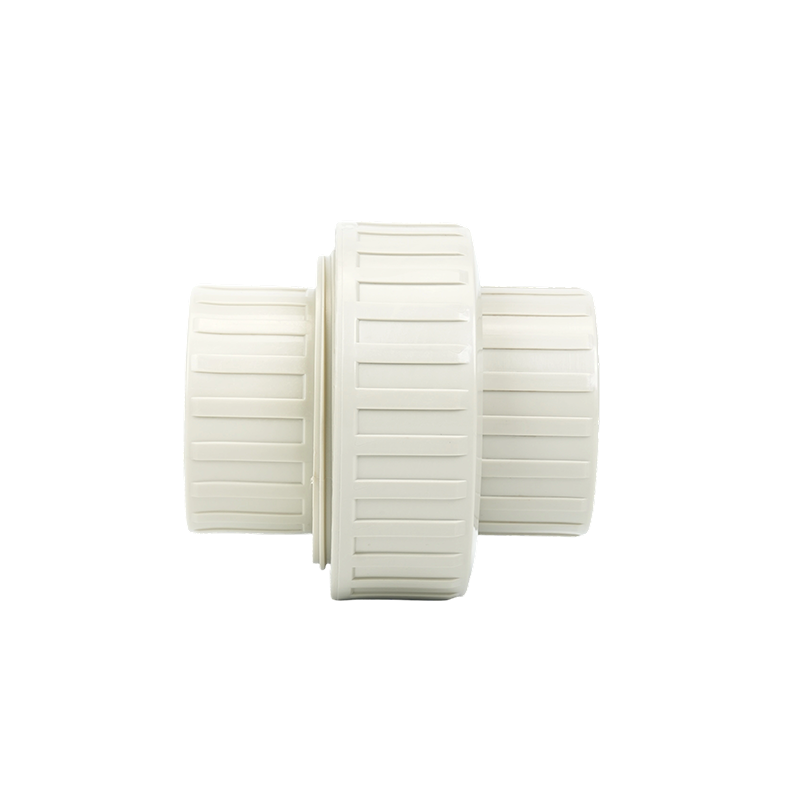
Description: Designed for connecting to pipelines with threaded ends. The EPDM/F...
View More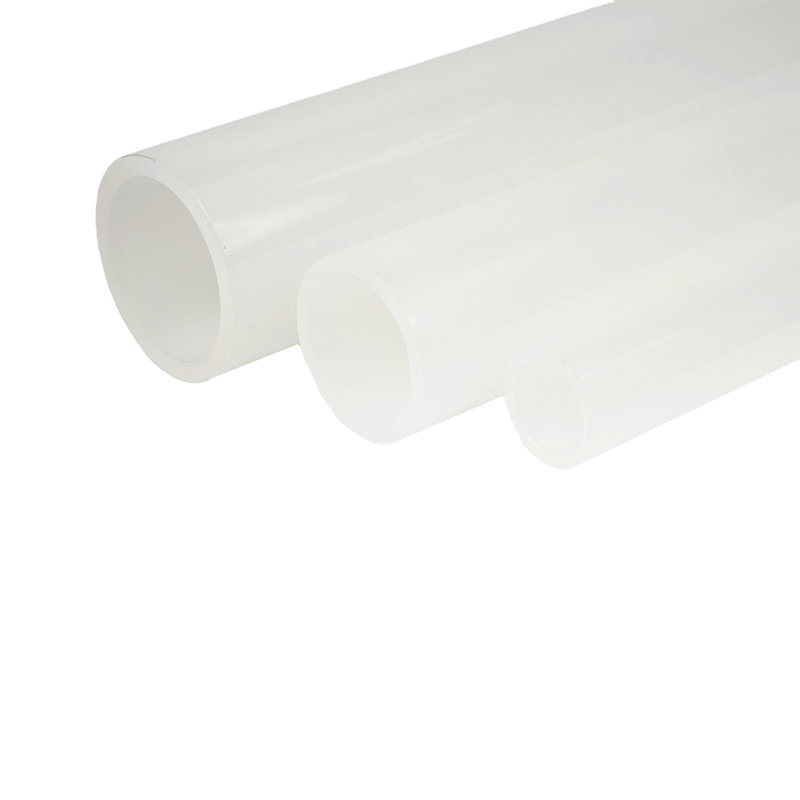
Product Specifications: DN15 (D20), DN20 (D25), DN25 (D32), DN32 (D40), DN40 (D5...
View More
Products
Company Information
Address: No. 55 Haichuan Road, High-Tech Zone, Dongtai City, Jiangsu Province, China
Mobile: +86 137 7009 5258
Tel: +86-515-85479999
Email: [email protected]
We'd love to hear from you!
